
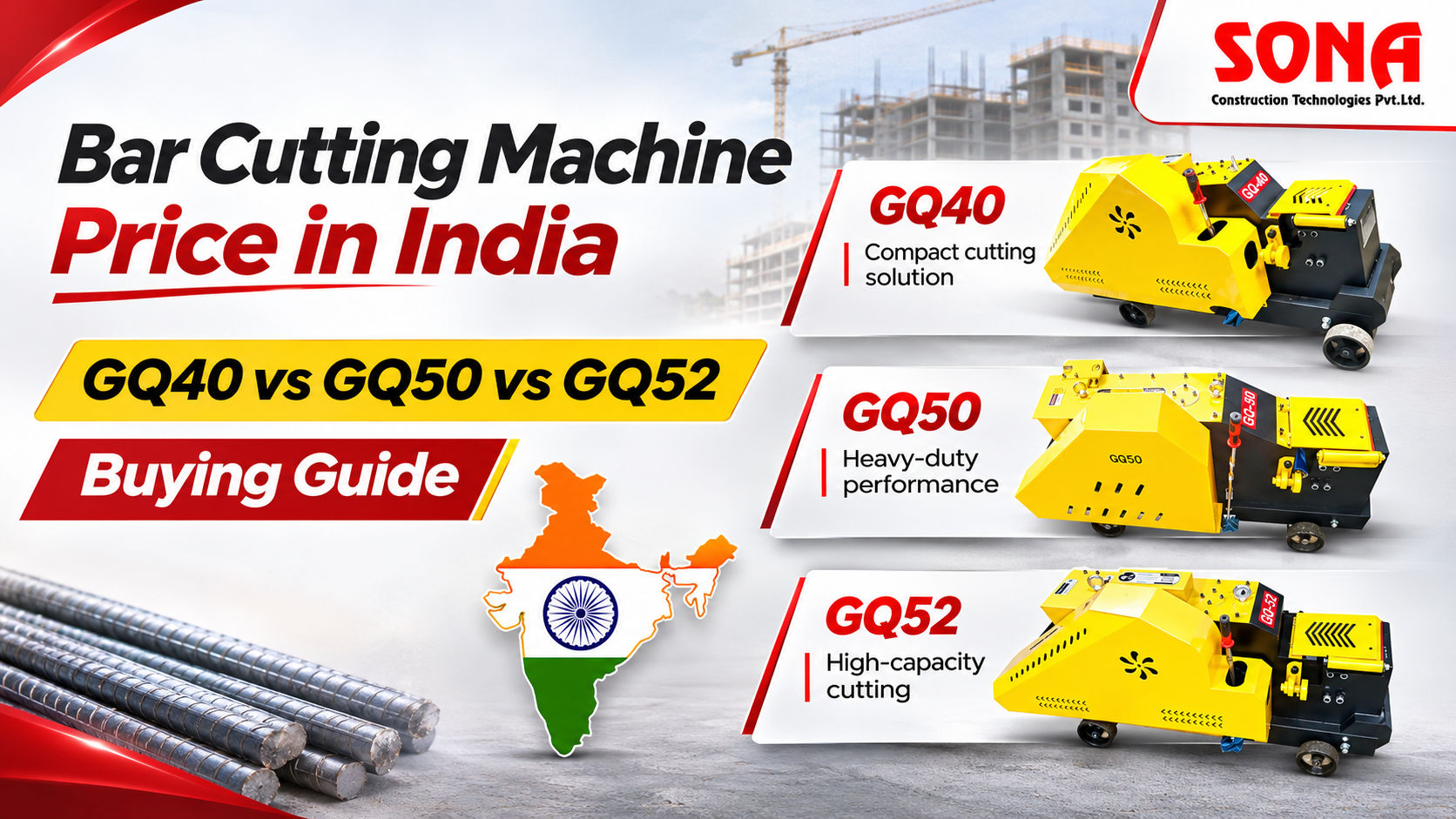
Every construction site that works with TMT bars needs a reliable way to cut them. Hand cutting and gas cutting waste time, material and labour. A bar cutting machine fixes all three. The real question is which one to buy.
In India, the three models buyers compare most often are the GQ40, GQ50 and GQ52. The numbers refer to the maximum bar diameter the machine is designed to cut, and the differences in motor power, build and price follow from that. This guide from Sona Vibrators explains each model, what it costs, and how to choose without overpaying.
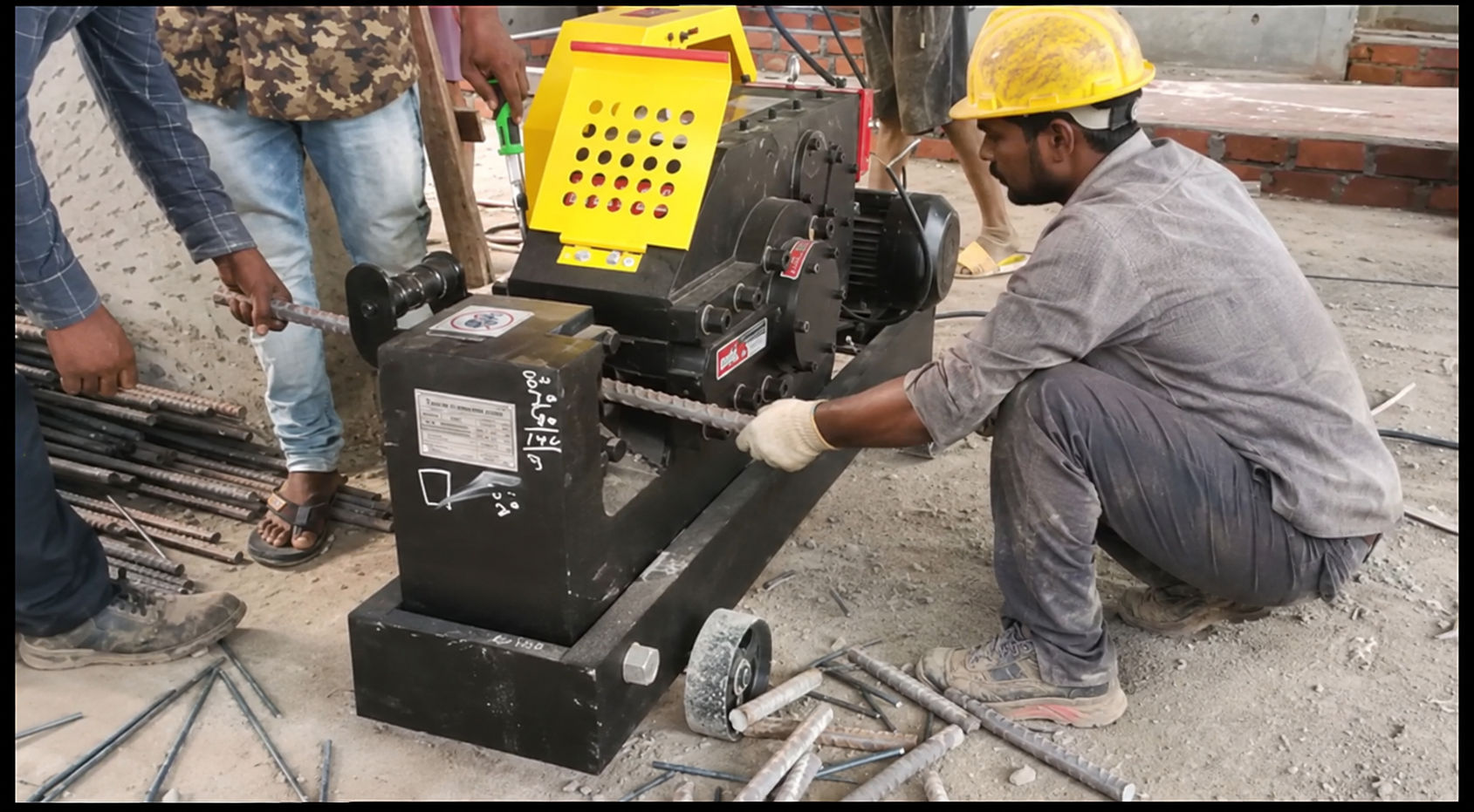
A bar cutting machine, also called a rebar cutter or steel bar cutter, is an electric machine that shears TMT or mild steel bars to length using a motor-driven blade. It is used on construction sites, in bar bending yards, precast plants and fabrication shops. Compared with manual methods, it gives faster, cleaner and more consistent cuts, and it keeps cutting lengths uniform, which reduces wastage on every pour.
| Feature | GQ40 | GQ50 | GQ52 |
|---|---|---|---|
| Max bar diameter (approx.) | 40 mm | 50 mm | 52 mm |
| Typical motor | Around 3 kW (4 HP) | Around 4 kW (5.5 HP) | Around 4 kW or higher |
| Best for | Residential and small commercial | Large commercial and infrastructure | Heavy infrastructure and high-volume yards |
| Typical duty | Light to medium | Medium to heavy | Heavy and continuous |
| Indicative new price in India | Lowest of the three | Mid-range | Highest of the three |
Specifications and prices vary by manufacturer, motor rating, blade type and voltage. Always confirm the exact figures on the spec sheet or listing before you buy.
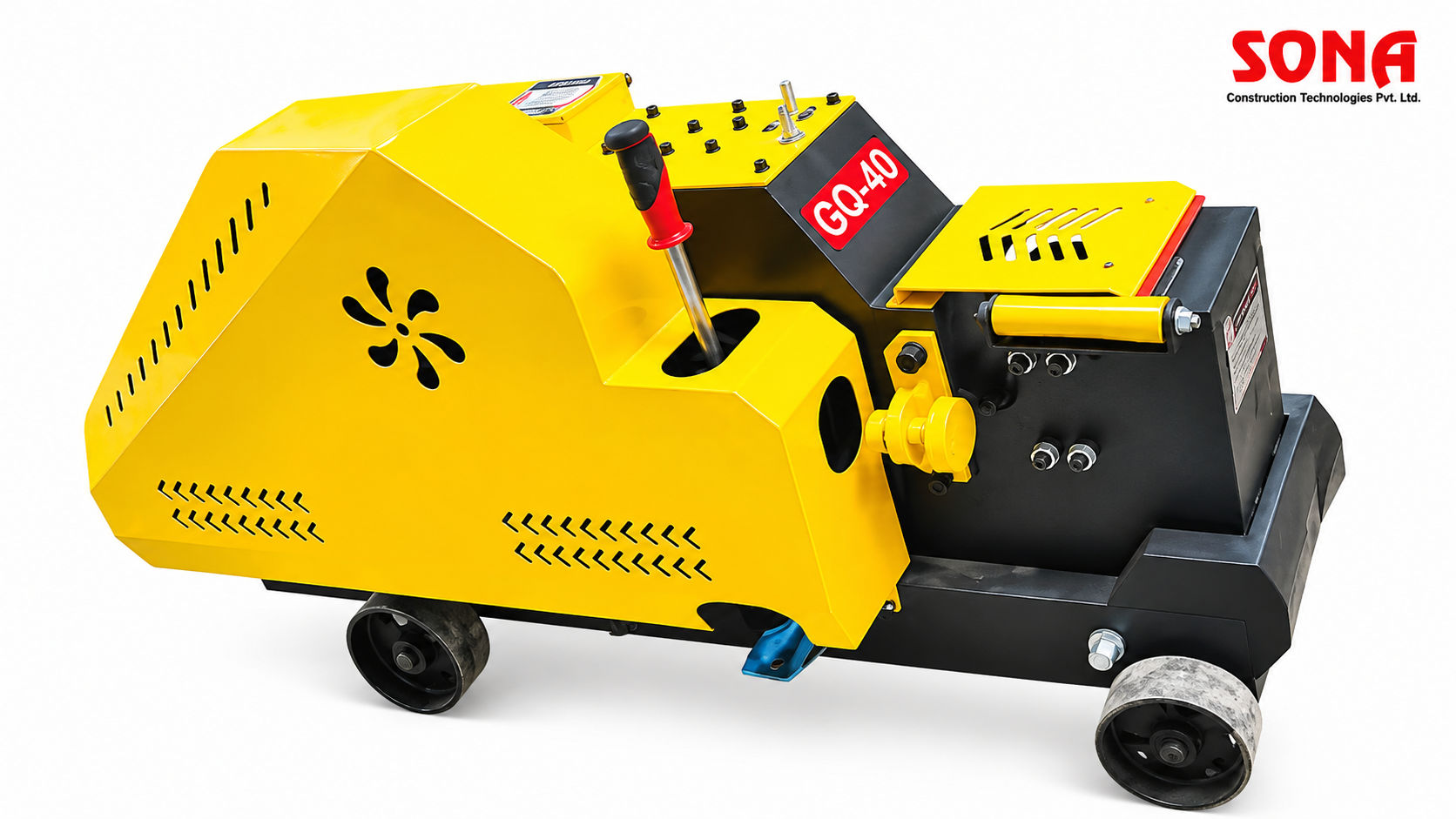
The GQ40 is the entry point for most buyers and the most common model on small and mid-size sites.
Who it suits
Strengths
Limitations
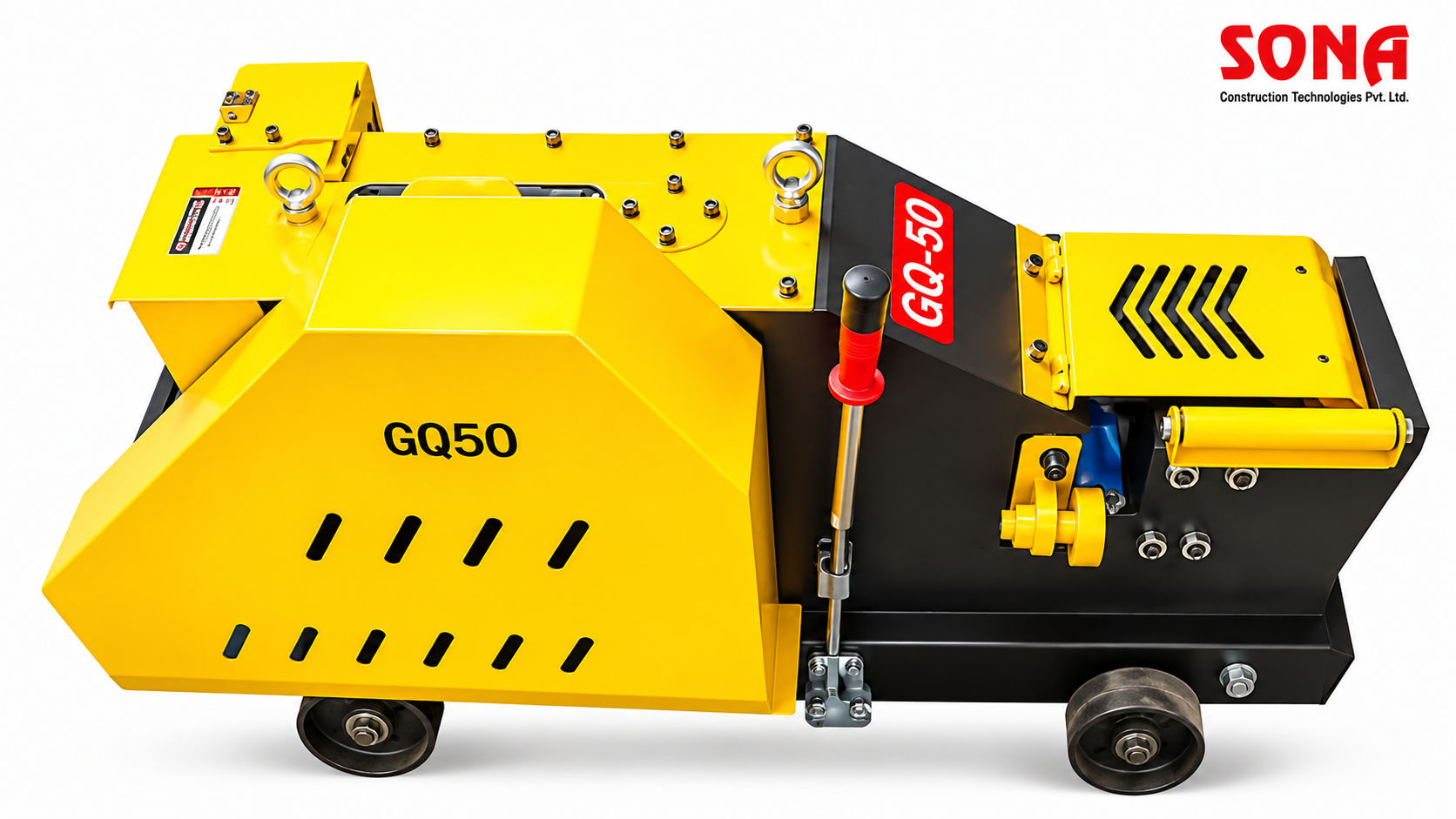
The GQ50 is the all-rounder, and for many growing contractors it is the sweet spot between price and capability.
Who it suits
Strengths
Limitations
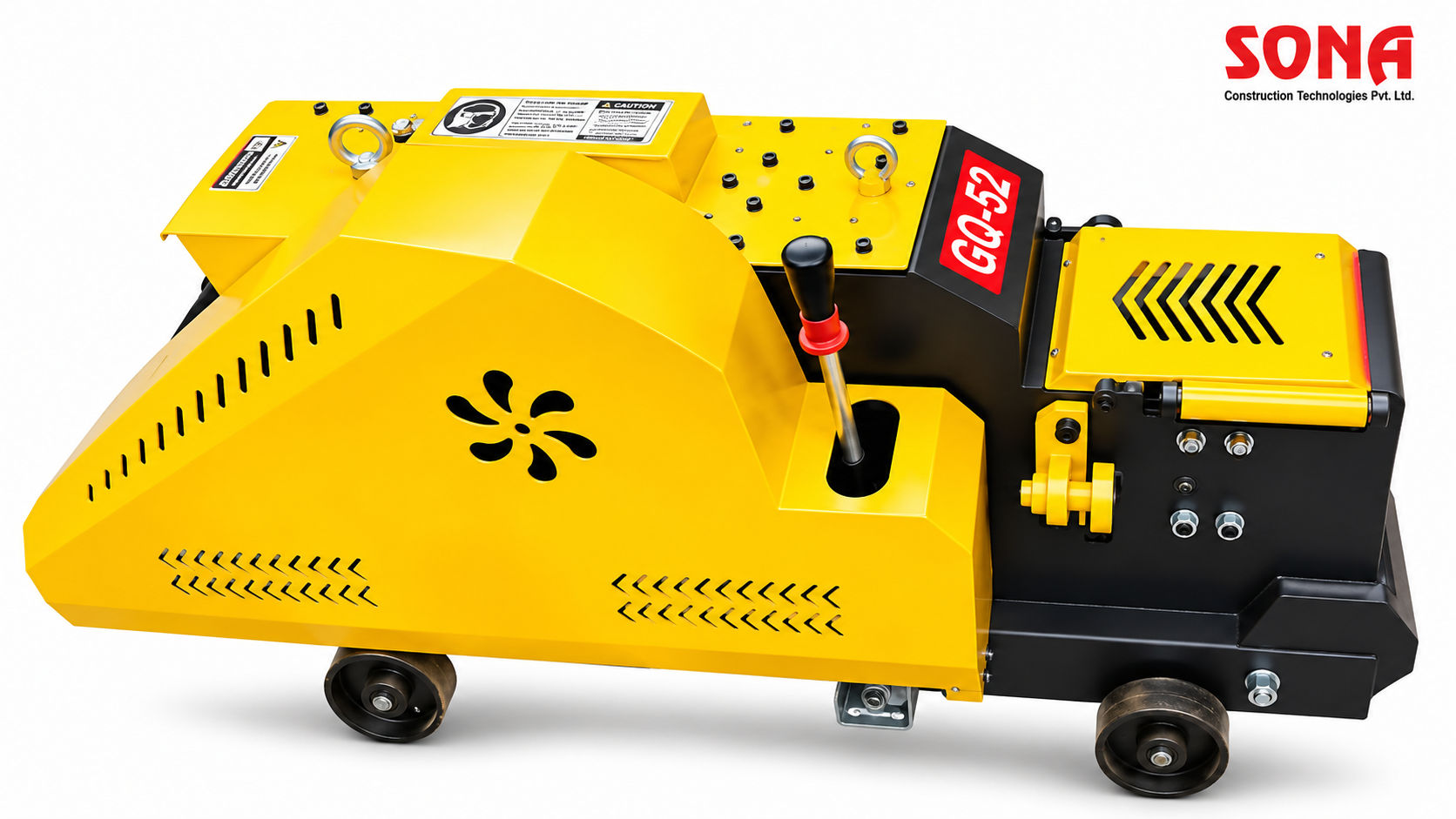
The GQ52 sits at the top of this group and is built for demanding, high-volume work.
Who it suits
Strengths
Limitations
Prices change with brand, motor power, blade quality, build and whether the machine is new or used. As a general pattern:
Used and refurbished machines can cost noticeably less than new ones, and a well-maintained GQ50 or GQ52 often keeps its value better than a smaller machine. Contact Sona Vibrators for live pricing instead of relying on a fixed number, since quotes vary by city, configuration and order size.
What affects the price
Start with your thickest bar and your daily volume, then work backwards.
Simple Rule of Thumb
Before you pay, confirm these points with the seller:
What does the number in GQ40, GQ50 and GQ52 mean?
It refers to the approximate maximum bar diameter in millimetres that the machine is designed to cut.
Which is the best bar cutting machine for a small construction project?
The GQ40 is usually enough for residential and small commercial work where bars rarely exceed 32 mm.
Is the GQ52 worth the extra money over the GQ50?
Only if you regularly cut very thick bars or run the machine for long, continuous shifts. For most contractors the GQ50 offers better value.
Can I buy a used bar cutting machine?
Yes. Used machines can offer strong savings, but verify condition, service history and blade wear, and ask for a demonstration cut.
How do I get the latest bar cutting machine price in India?
Prices vary by seller, location and condition. Browse the Sona product range to compare options, or contact the Sona team for a direct quote.
Choosing between the GQ40, GQ50 and GQ52 comes down to your bar size, your workload and your budget. Match those three and the right machine becomes clear.
Not sure which model fits? Talk to the Sona Vibrators team, or explore our bar cutting machines to check specifications and request a quote for the model that fits your project.
Related products: TMT bar cutting machines | Rebar bending machines | Cut and bend machines
Bar Cutting Machine Price in India: GQ40 vs GQ50 vs GQ52 Buying Guide
Why Soil Compaction Fails Even After Multiple Roller Passes: 7 Site-Level Causes and How to Fix Them
Field Density Test (FDT): Methods, Procedure & Calculation
India’s Infrastructure Push Is Driving Demand for Construction Machinery, but the Ground Reality Is More Complex
Soil vs Asphalt Compaction: 7 Practical Differences Every Site Engineer Should Know

Copyright © 2026 Sona Construction Technologies Private Limited