
Soil compaction is controlled by water. Asphalt compaction is controlled by heat. Everything else in this guide grows from that one idea.
Both jobs squeeze air out of a material so it becomes dense and strong. But the method, the machines and the mistakes are very different. This guide explains the difference in plain words, and adds field tips that new engineers rarely get from textbooks.
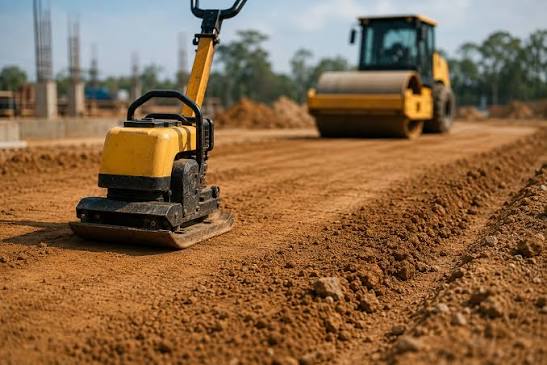
A road is built in layers: soil at the bottom, stone in the middle, asphalt on top. Each layer must be dense before the next one goes on. If one layer is weak, the layers above it sink, crack or wear out early.
That is why a good site engineer checks the layers nobody sees, not just the black top that everyone sees.
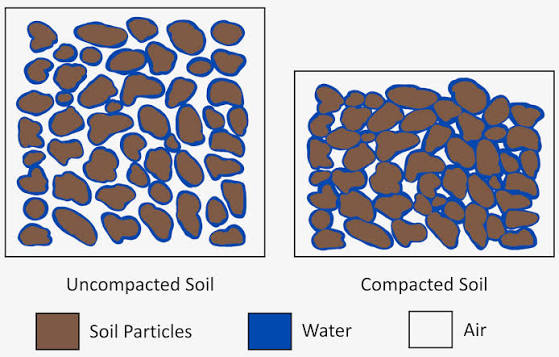
Soil compaction means pressing soil, sand or gravel until the particles lock tightly together. You do it in thin layers called lifts. Spread a lift, compact it, test it, then add the next one.
Three things decide the result:
How is it checked? Labs use the Proctor test to find the maximum density a soil can reach. On site, the density you achieve is compared with that number and written as a percentage. In India, labs usually follow IS 2720 (Part 7 for standard Proctor, Part 8 for modified Proctor), and field density is often checked by the sand replacement method (IS 2720 Part 28). Always confirm the latest edition and your project specification.
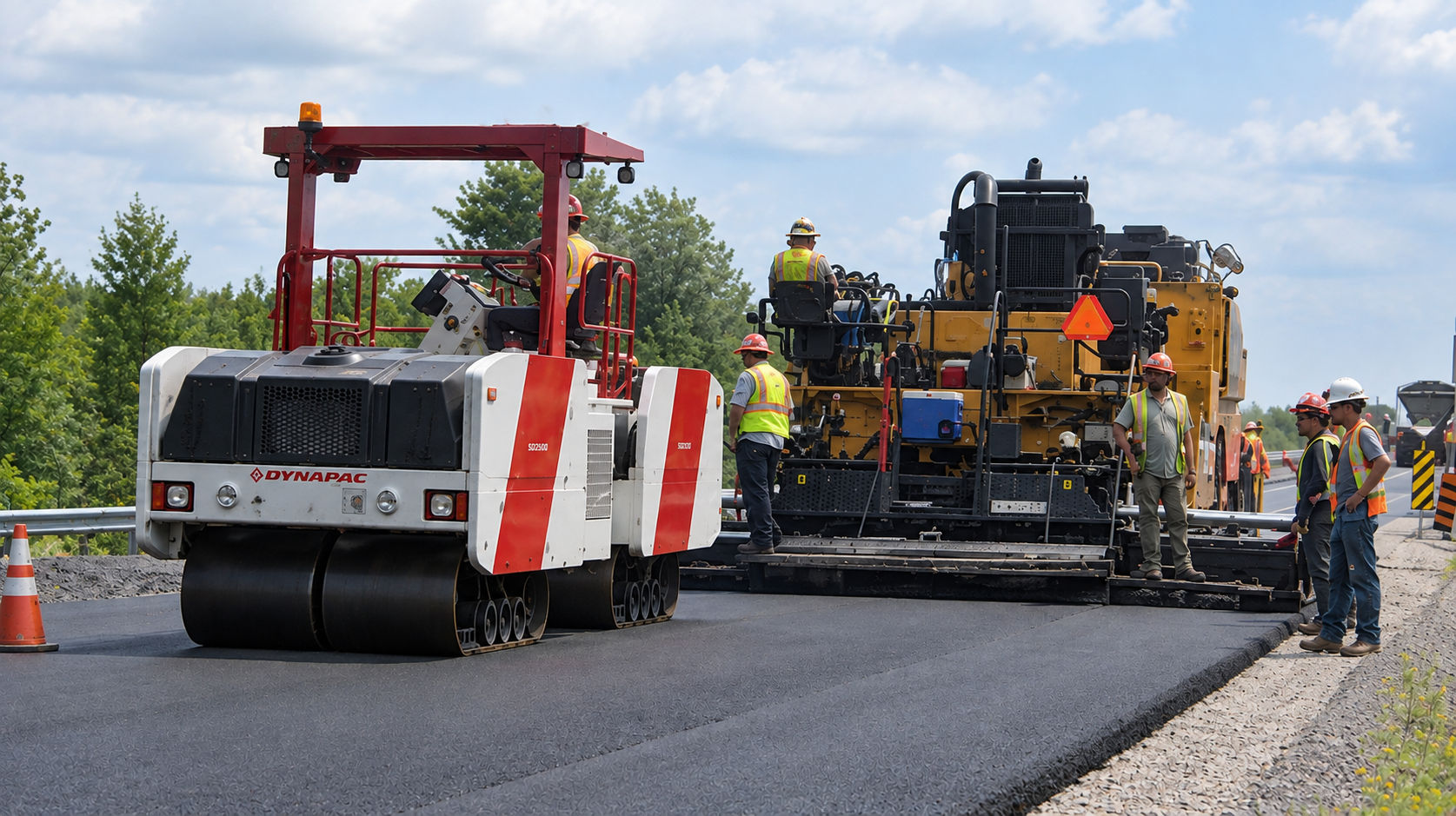
Asphalt is a mix of stone, sand and bitumen, laid hot. It must be rolled right behind the paver, while it is still hot and soft. The clock starts the moment the mix leaves the plant, and it never stops.
Four things decide the result:
Most jobs use a three-roller train:
How is it checked? Density is compared with the mix's maximum possible density. A common target is about 92% to 96% of that maximum, which leaves roughly 3% to 8% air voids. Crews use density gauges on site, and labs test cores cut from the finished road. Every extra 1% of air voids can cost about 10% of the pavement's life, so small gaps matter.
In India, the MoRTH Specifications for Road and Bridge Works (Section 500) list mixing, laying and rolling temperatures for each bitumen grade. Rolling must finish before the mat cools to the minimum temperature in that table.
| Point | Soil compaction | Asphalt compaction |
|---|---|---|
| Material | Soil, sand, gravel, stone base | Hot mix of stone, sand and bitumen |
| Main control | Moisture content | Mix temperature |
| Time pressure | Low. You can adjust water and re-roll | High. The mat cools and stiffens fast |
| How layers are built | Lifts, each compacted before the next | Thin layers rolled right behind the paver |
| Typical machines | Padfoot rollers (clay), smooth-drum vibratory rollers, plate compactors, rammers | Vibratory, pneumatic and static steel rollers |
| Lab reference | Proctor test (maximum dry density) | Maximum theoretical density of the mix |
| Common failure | Settlement, dips, uneven surface | Ruts, cracks, water damage, potholes |
| Fixing mistakes | Possible if caught early | Very hard after the mat has cooled |
Soil needs the right amount of water. Asphalt needs the right amount of heat. When a soil job goes wrong, check moisture first. When an asphalt job goes wrong, check temperature first.
If soil is too wet, you can wait for it to dry. If it is too dry, you can sprinkle water. Asphalt gives you one short window. Miss it, and the density you needed is gone.
Soil is built up in several lifts, and each lift is tested. Asphalt goes down as a thin mat, so it cools quickly and every minute counts.
Padfoot drums suit clay soil and are never used on asphalt. Rubber-tired rollers and a smooth finish roller are common on asphalt, but rare on soil work.
On sand and gravel, vibration is the main tool. On asphalt, vibration is used mostly in the breakdown pass. The finish pass is usually static, so the surface stays smooth.
Soil is judged against the Proctor test. Asphalt is judged against the mix's maximum possible density, using gauges and cores.
Bad soil compaction shows up slowly, as dips and settlement months later. Bad asphalt compaction shows up sooner, as ruts, cracks and potholes, because water gets into the open surface.
| Job | Typical machine | Why it fits |
|---|---|---|
| Large soil and subgrade areas | Soil compaction roller | Heavy drum covers wide areas quickly |
| Trenches, edges, tight spots | Plate compactor, tamping rammer or earth rammer | Small machines reach where rollers cannot |
| Small asphalt patches and footpaths | Walk-behind roller or walk-behind drum roller | Easy to control on small, narrow jobs |
| Roads and larger asphalt surfaces | Vibratory road roller or ride-on roller | Higher output for long runs |
Always match the machine weight and settings to your layer thickness and project specification. You can see the full range on our products page.
These are the habits that separate a careful engineer from a lucky one.
Some smooth-drum rollers work on both, but the settings differ. Soil work may use a padfoot drum and strong vibration. Asphalt work depends on temperature, roller order and a static finish pass. Always follow the maker's guidance and your specification.
They are hard in different ways. Asphalt is hard because of time. Soil is hard because mistakes stay hidden until later.
It depends on the project specification. Soil work usually asks for a high percentage of Proctor density. Asphalt work often targets about 92% to 96% of maximum density. Always follow your project documents.
Common causes are low density, rolling after the mat has cooled, a weak base, or water getting in through air voids.
Use a plate compactor or rammer for small and tight areas. Use a roller for larger areas where speed and coverage matter.
Soil and asphalt compaction share one goal: a dense, strong layer that lasts. But they follow different rules. For soil, control water, thickness and machine choice. For asphalt, control temperature, timing and roller order.
Get both right, and your road, yard or foundation will need far fewer repairs.
Need compaction equipment for your next project? Sona Construction Technologies is an authorized XCMG dealer supplying soil compaction rollers, plate compactors, rammers and road rollers across India. Browse our products, see where we supply or contact our team for a quote.
Coming next in this series (add links once published): What is the Proctor test? | Plate compactor vs roller: how to choose | Asphalt compaction temperature guide | Breakdown, intermediate and finish rolling explained.
Disclaimer: This article is for general education. Always follow your project specification, applicable IS, IRC and MoRTH standards, and your engineer's instructions.
Soil vs Asphalt Compaction: 7 Practical Differences Every Site Engineer Should Know
Smarter Machines, Stronger Roads: How Mechanisation Is Rebuilding India’s Road Construction

₹12.2 Lakh Crore for Infrastructure: Which Construction Machines Will Be in Demand?

SONA at ACE TECH Bengaluru 2026: Construction Equipment Showcase Recap
Bar Bending Schedule (BBS) Using Excel in 2026

Copyright © 2026 Sona Construction Technologies Private Limited