

Twenty years ago, many road jobs depended on a large crew with shovels, hand rammers and a few basic rollers. Today, a good road site looks very different. You see vibratory rollers, plate compactors, excavators, pavers and sensors, all working together.
This change is called mechanisation. It simply means using machines to do work that people once did by hand.
India has one of the largest road networks in the world, at around 4.7 million km, and it keeps growing. Building and repairing that much road by hand is not possible. Machines are now the only way to deliver roads at the speed and quality the country needs. If you want to know which machines are likely to see the most demand as investment rises, read our analysis: ₹12.2 Lakh Crore for Infrastructure: Which Construction Machines Will Be in Demand?
In this blog, we explain in simple words how mechanisation is changing road construction, why compaction sits at the heart of it, and how contractors can get the most from their machines.
Mechanisation means replacing slow, hand-based work with machines at each stage of a road project. A typical road has these stages:
Machines now support every one of these stages. Mini excavators and mini dumpers handle digging and material movement on tight sites. Rollers and compactors do the pressing. On concrete roads and pavements, a screed vibrator and a bull float help finish the surface evenly.
India’s own road authorities have long pushed for this shift. The Indian Roads Congress has published detailed guidelines on compaction equipment for road works, prepared by its Mechanisation Committee. That shows how important this topic is for the industry.
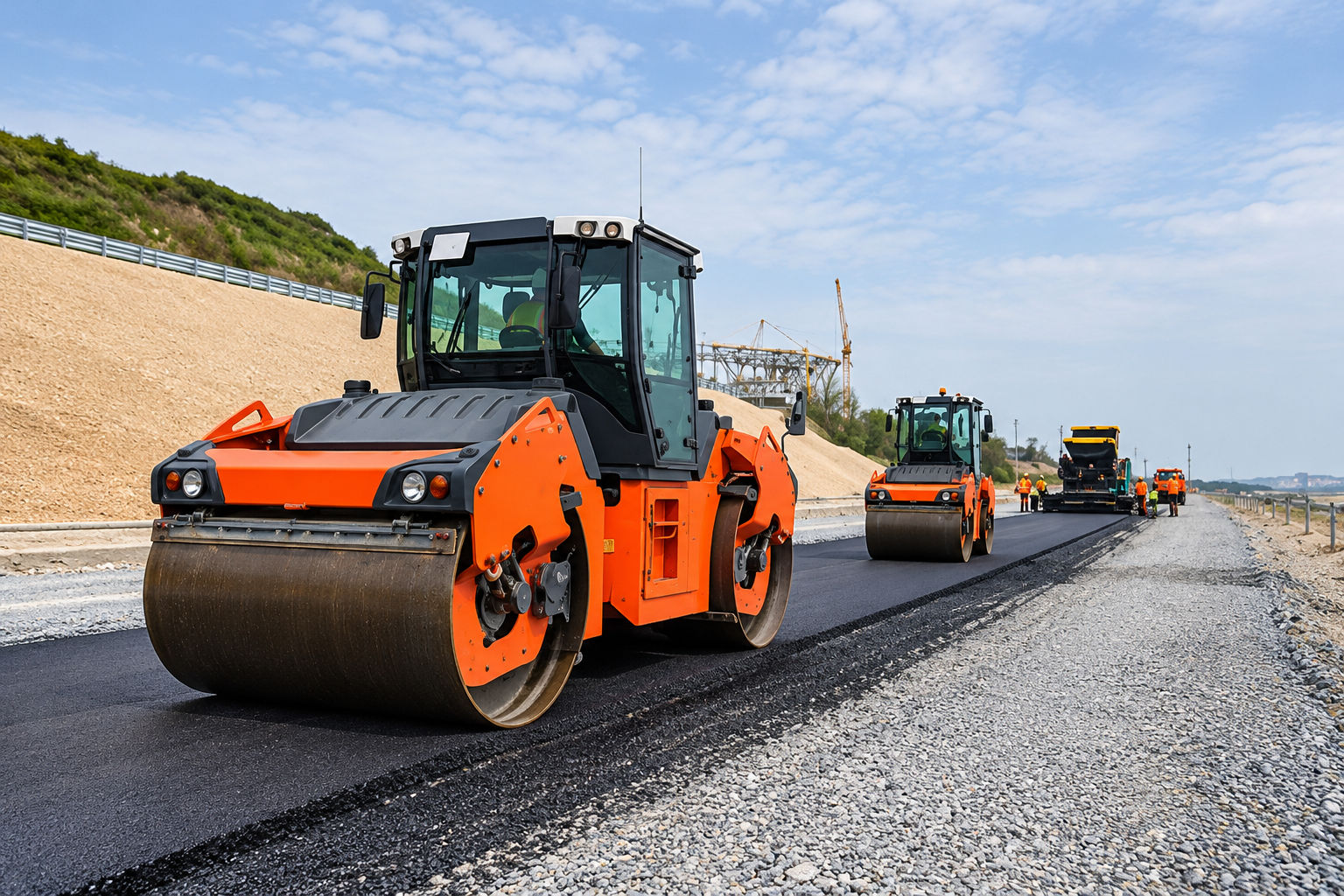
A road can look perfect on day one and still fail in two years. In most cases, the reason is poor compaction.
Compaction means pressing soil, stone or asphalt so the particles sit close together. Fewer gaps and less air mean the layer can carry more weight and resist water.
When compaction is poor, you may see:
Good compaction does the opposite. It makes the road last longer and cost less to maintain. This is why the biggest gains from mechanisation are happening in compaction.
| Point | Manual compaction | Machine compaction |
|---|---|---|
| Speed | Very slow | Many times faster |
| Consistency | Changes from worker to worker | Even and repeatable |
| Depth of compaction | Shallow | Deeper and stronger |
| Labour need | High | Lower, but skilled |
| Quality control | Mostly by eye | Can be measured |
| Long-term cost | High repairs | Lower repairs |
Hand ramming still has a place in very small jobs. But for any serious road work, machines give a result that people simply cannot match.
A roller covers more ground in an hour than a whole crew can in a day. Projects finish sooner, and contractors can take on more work.
Vibratory machines send energy deep into the layer, so the material locks together better. A well-compacted base supports traffic for years.
Machines apply the same force again and again. This removes the weak spots that hand work often leaves behind.
Machines take over heavy and repetitive tasks. Fewer people carry loads or work in the path of traffic, which cuts the chance of injury.
Machines cost money to buy or rent. But faster work, less rework and fewer repairs usually bring the total cost down.
This is the biggest change in recent years, and we cover it next.
Modern rollers are no longer just heavy drums. Intelligent compaction (IC) machines have sensors, an onboard computer and GPS.
Here is what that means in simple terms:
This helps in two ways. It stops under-compaction, which causes early failure. It also stops over-compaction, which wastes fuel and time and can even damage the material.
Several leading equipment makers in India now offer IC or similar systems on their larger rollers. Industry voices call it one of the most important technology steps in Indian road building.
There is a catch, though. Industry interviews note that many machines now come with telematics (remote tracking), but actual use of the data is still low. The technology is arriving faster than the habit of using it. Contractors who learn to use this data will have a real edge.
Most articles on this topic talk only about large highway rollers. But a large share of real road work happens in smaller or tighter spaces. The right machine depends on the material, the layer thickness and the working space.
| Job on site | Suitable machine |
|---|---|
| Wide soil and gravel base layers | Soil compaction roller or vibratory road roller |
| Asphalt, medium roads, service lanes | Ride-on roller |
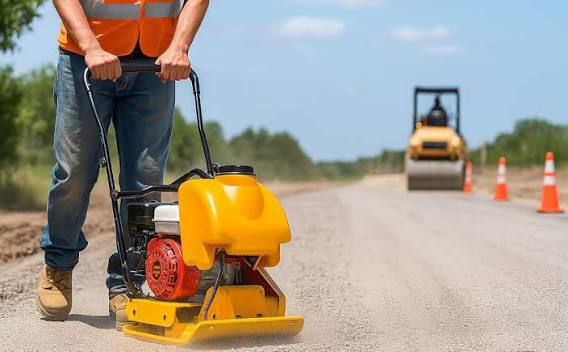
| Narrow roads, footpaths, repair patches | Walk behind roller or walk behind drum roller |
| Sand, gravel and asphalt in small and medium areas | Plate compactor |
| Narrow trenches, pipe and cable cuts, cohesive soil | Tamping rammer or earth rammer |
Here is the simple logic behind these choices:
These compact machines bring machine-level quality to places where large equipment cannot go. They are also within reach of small and mid-size contractors, which makes them a key part of the mechanisation story.
After compaction, concrete roads and pavements need clean finishing and, at times, cutting for joints. Equipment such as a concrete cutter and a power trowel completes the job.
Mechanisation is powerful, but it is not magic. Contractors still face real problems:
The good news is that each of these has a clear solution.
Road construction is moving in a clear direction:
The contractors who adapt early will win more tenders, finish faster and build roads that last.
Sona Construction Technologies is an authorised XCMG dealer and a B2B supplier of construction equipment across India, with more than 30 years of industry experience. Our range covers walk behind rollers, soil compaction rollers, vibratory road rollers, plate compactors and tamping rammers, along with the digging, finishing and concrete equipment a road or pavement job needs.
We supply Pan India with after-sales support and spare parts, so your machines keep working when your deadline is close. You can browse the full equipment range, learn more about Sona, or contact our B2B team for a quote and advice on the right machine for your site.
It means using machines instead of hand labour for tasks like earthwork, compaction, paving and finishing. It makes work faster, safer and more consistent.
Compaction removes air gaps and makes each layer dense and strong. Without it, roads develop ruts, cracks and potholes early.
A road roller is a large machine for wide areas like highways. A plate compactor is smaller and used for patches, trenches, edges and narrow spaces.
Use a tamping rammer for narrow trenches and cohesive, clay-rich soil, where its strong, focused impact compacts deeper than a plate can.
It is a system where rollers use sensors, GPS and an onboard computer to measure compaction in real time and guide the operator, so the layer is neither under- nor over-compacted.
For almost all road work, yes. Machines are faster, reach deeper and give even results. Manual methods suit only very small, light jobs.
Static rollers, pneumatic tyre rollers, vibratory rollers, plate compactors and rammers. The right choice depends on the material and the site.
It changes the type of work. Fewer people do heavy manual tasks, while more skilled roles open up for operators, technicians and supervisors.
Mechanisation has changed road construction from slow, hand-based work into a fast, measured and quality-driven process. Compaction is where this change matters most, because it decides how long a road will last.
The lesson for every contractor is simple: choose the right machine, train your people, maintain your equipment and use data to prove your quality. Do these four things, and your roads will stand strong long after the project is done.
Planning a road, pavement or infrastructure project? Talk to the Sona team or explore our compaction equipment.
Smarter Machines, Stronger Roads: How Mechanisation Is Rebuilding India’s Road Construction
₹12.2 Lakh Crore for Infrastructure: Which Construction Machines Will Be in Demand?
SONA at ACE TECH Bengaluru 2026: Construction Equipment Showcase Recap
Bar Bending Schedule (BBS) Using Excel in 2026
Grades of Concrete (M5 to M80): Uses, Strength and How to Compact Each Grade Properly

Copyright © 2026 Sona Construction Technologies Private Limited