
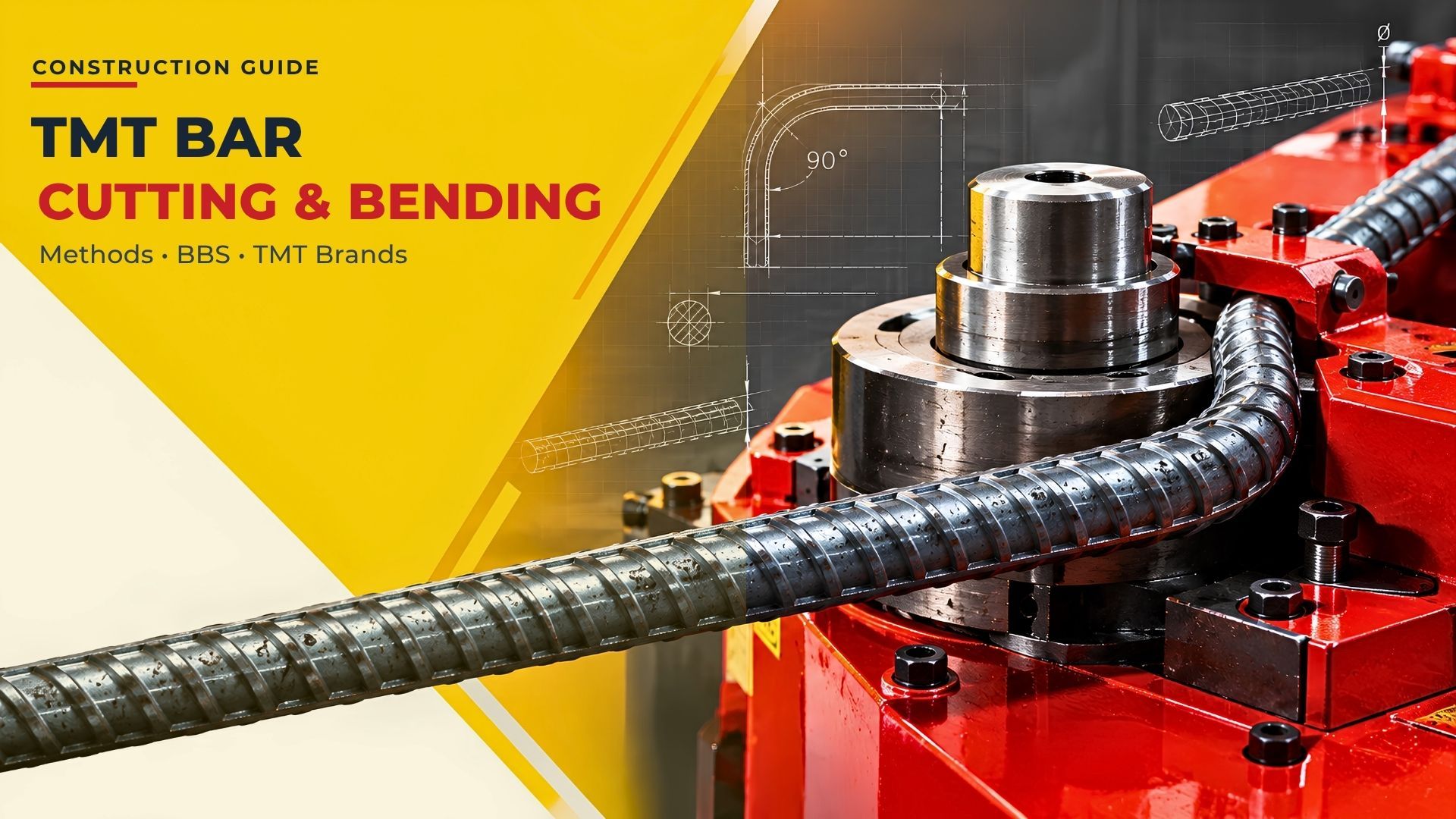
TMT bars are an important component of reinforced concrete construction. They provide reinforcement to concrete structures such as beams, columns, slabs, footings and foundations. Before these bars are placed at a construction site, they often need to be cut into specific lengths and bent into required shapes according to structural drawings and the Bar Bending Schedule (BBS).
Accurate TMT bar cutting and bending are essential for maintaining the required dimensions, reducing material wastage and avoiding rework during reinforcement installation. Depending on the project size and fabrication requirements, TMT bars may be processed manually or with dedicated bar cutting and bar bending machines.
In this guide, we will explain what TMT bars are, why they need to be cut and bent, how BBS supports reinforcement fabrication, the common cutting and bending methods, the role of machines, important precautions, ways to reduce wastage, and common TMT bar brands available in India.
TMT bars, or Thermo-Mechanically Treated bars, are steel reinforcement bars used in reinforced concrete construction. They are manufactured to provide the strength and ductility required for reinforcement applications and are commonly used in columns, beams, slabs, foundations, footings and other structural elements.
TMT bars are available in different grades and diameters. The appropriate grade and diameter depend on the structural design, project requirements and applicable standards. Their mechanical properties are particularly important during reinforcement fabrication because the bars may need to be cut and bent into different shapes before installation.
Concrete has high compressive strength but requires steel reinforcement to provide the required tensile reinforcement in many structural applications. TMT bars are therefore placed within concrete members according to the structural design.
The ribbed surface of TMT bars also helps provide mechanical bonding with concrete. Depending on the project, bars can be fabricated into different shapes and sizes for applications such as beams, columns, slabs, footings and stirrups.
The requirements for high-strength deformed steel bars and wires for concrete reinforcement are covered under IS 1786. When selecting TMT bars, factors such as grade, diameter, mechanical properties and compliance with applicable specifications should be considered.
TMT bars are generally supplied in straight lengths or coils, but reinforcement in a building or infrastructure project rarely consists only of straight bars. Structural drawings specify different lengths, shapes, hooks, bends and configurations depending on where the reinforcement will be placed.
Cutting changes the length of a TMT bar to match the required dimensions, while bending changes its shape according to the reinforcement detailing.
For example, reinforcement used in a beam may require specific bends and anchorage, while stirrups need to be formed into closed or specified shapes. Similarly, reinforcement for columns, slabs and footings may require different dimensions and configurations.
Incorrect cutting or bending can result in bars that do not match the required dimensions or shapes. This can lead to material wastage, rework, fabrication delays and difficulties during reinforcement installation.
For this reason, fabrication should be carried out according to approved structural drawings and the Bar Bending Schedule rather than relying on estimation or convenience at the worksite.
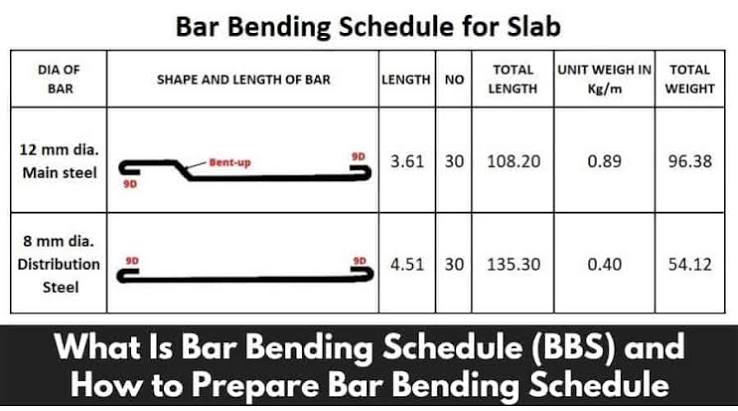
A Bar Bending Schedule (BBS) is a detailed document used to specify the reinforcement bars required for a construction project. It provides fabrication information that helps workers and fabricators understand which bars need to be cut and bent and how they should be prepared.
A BBS can contain information such as the bar mark, diameter, quantity, shape, dimensions, cutting length and the structural member where the bar will be used.
BBS provides a common reference between structural drawings, reinforcement fabrication and installation. Before cutting a TMT bar, the required bar diameter, quantity and cutting length should be checked against the relevant details.
Similarly, bending should follow the specified shape and dimensions rather than an approximate angle or manually estimated measurement.
Accurate BBS information can also help with material planning and reduce unnecessary offcuts. When fabrication is properly planned, bars can be organized by diameter, shape and structural location, making them easier to identify and install.
TMT bar cutting involves reducing a bar to the required length according to the structural drawings and BBS. The cutting method depends on the bar diameter, quantity, project requirements and available equipment.
A typical cutting process involves the following steps:
Check the BBS and structural drawings: Confirm the required bar diameter, quantity, shape and cutting length.
Verify the material: Make sure the correct bar grade and diameter are being processed.
Measure the required length: Mark the cutting point accurately using the specified dimensions.
Select suitable cutting equipment: The equipment should be appropriate for the bar diameter and volume of work.
Cut the bar: Perform the cut according to the equipment manufacturer's operating procedure and safety requirements.
Inspect the cut bar: Check the length and condition of the cut before moving it to the next stage.
Identify and organize the bars: Group fabricated bars according to their bar marks, shapes or structural locations to prevent mix-ups during installation.
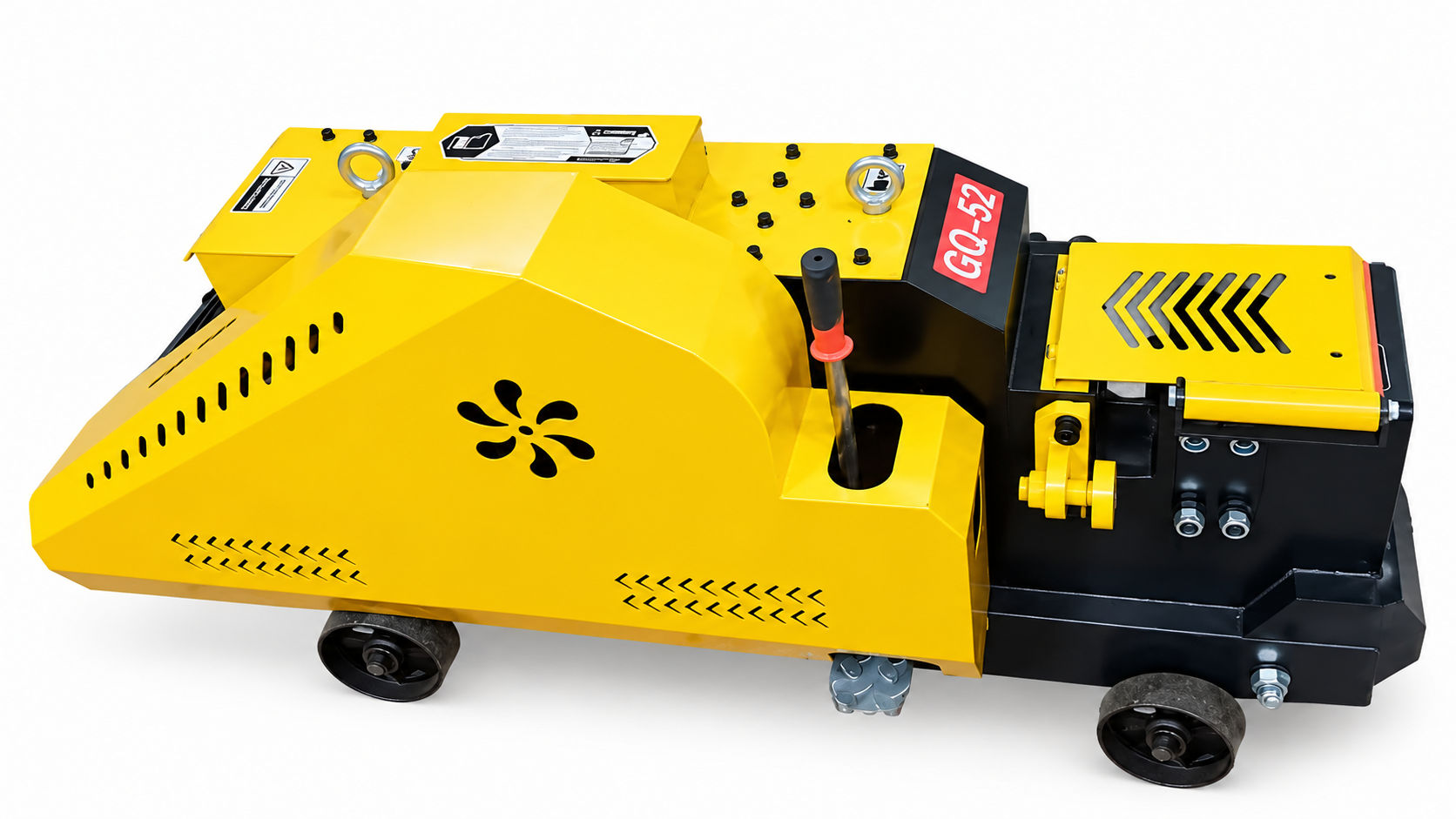
Depending on the project, TMT bars may be cut using manual methods for suitable small-scale work or dedicated mechanical and powered bar cutting machines for repetitive and higher-volume fabrication.
For larger projects, bar cutting machines can help standardize repetitive cutting operations and improve fabrication productivity when operated correctly.
TMT bar bending involves forming straight reinforcement bars into the shapes and dimensions specified by structural drawings and the BBS.
The required bend depends on the reinforcement detail, bar diameter, grade, structural member and applicable specifications. Therefore, there is no single bending setting or dimension that should be applied to every TMT bar.
A typical bending process includes:
Check the BBS and drawings: Confirm the required shape, dimensions and quantity.
Verify the bar: Check the diameter and grade before bending.
Set up the equipment: Use suitable bending equipment and configure it according to the required operation.
Position the bar correctly: Ensure that the bar is properly placed before starting the bending cycle.
Perform the bend: Bend the bar according to the specified shape and dimensions.
Inspect the finished bar: Check the shape, dimensions and bends against the required details.
Organize the fabricated reinforcement: Keep finished bars properly identified and separated for installation.
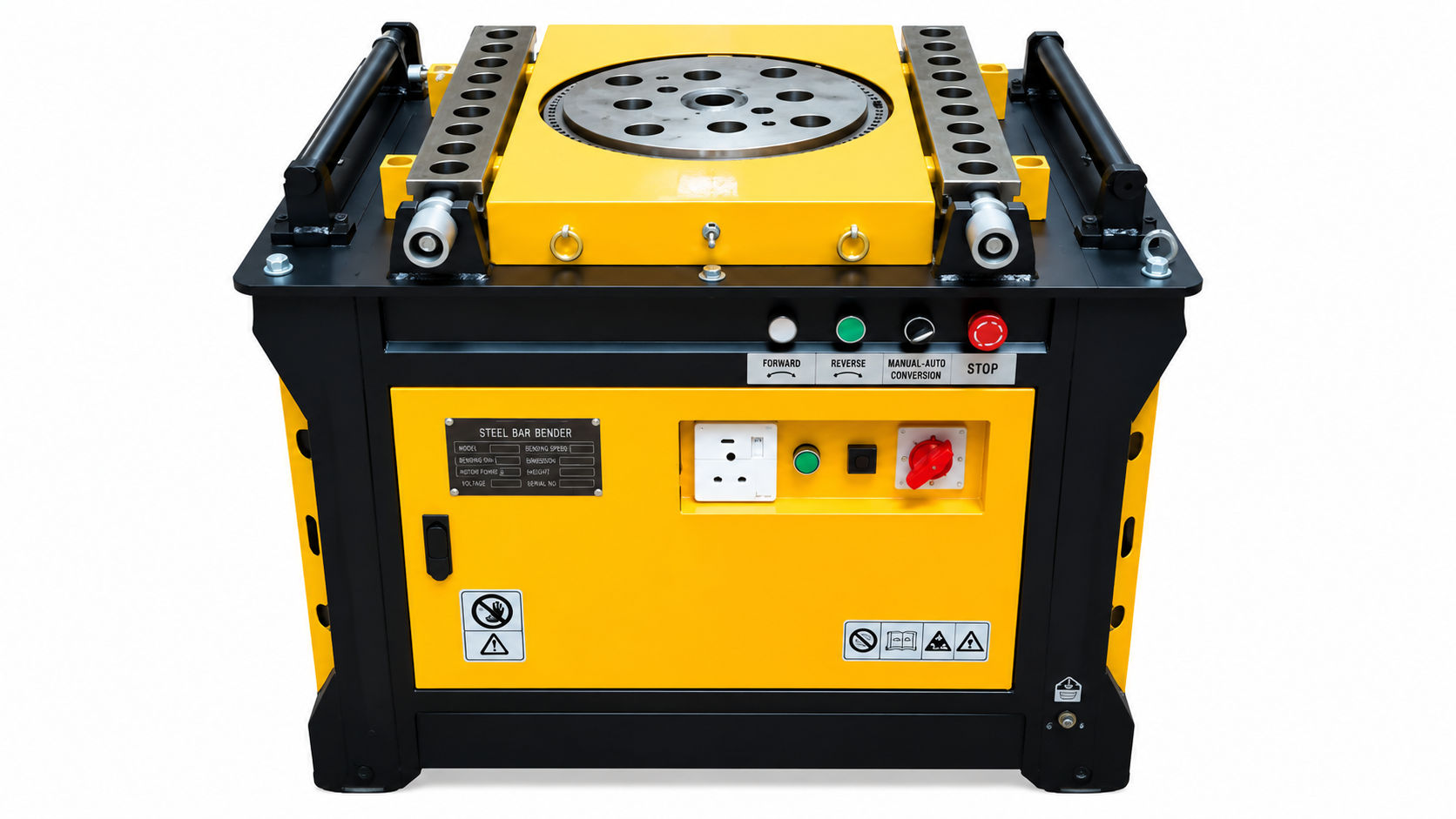
TMT bar bending machines are designed to assist with repetitive reinforcement bending operations. Depending on the machine and application, operators may use manual, jog, single-cycle or automatic operating modes.
The appropriate machine and operating settings depend on factors such as bar diameter, required shape, production volume and machine capacity. Operators should follow the machine manufacturer's instructions and the project's reinforcement specifications.
Both manual and machine-based methods can be used for reinforcement fabrication depending on project requirements.
| Factor | Manual or Basic Methods | Machine-Based Processing |
|---|---|---|
| Speed | More dependent on labour and working conditions | Suitable for repetitive and higher-volume work |
| Repetitive work | Can become labour-intensive | Designed for repeated operations |
| Accuracy | Highly dependent on measurement and operator technique | More controlled when properly set and operated |
| Labour requirement | Generally more manual involvement | Can reduce repetitive manual operations |
| Production volume | Suitable for certain smaller jobs | More suitable for larger fabrication requirements |
Machine-based processing does not eliminate the need for proper measurement and inspection. The BBS, machine settings and finished reinforcement should still be checked to ensure that the fabricated bars meet the required specifications.
Errors during reinforcement fabrication can affect both material usage and installation efficiency. Some problems occur because of incorrect measurements, while others result from failing to follow the BBS or using inappropriate equipment settings.
Incorrect cutting length
Measuring the wrong dimensions
Processing the wrong bar diameter
Mixing up bar marks
Producing excessive offcuts
Failing to inspect the finished cut
Incorrect bending angle
Incorrect bend dimensions
Improper bar positioning
Using unsuitable equipment or settings
Repeated bending or unnecessary reworking
Failure to follow the specified reinforcement shape
The first step is to verify the BBS and structural drawings before fabrication begins. Operators should confirm the bar diameter, required dimensions and quantity before processing a batch.
For machine-based fabrication, settings should also be checked before starting repetitive production. Finished bars should be inspected periodically to identify errors before a large quantity of reinforcement is fabricated incorrectly.
TMT bar wastage can increase when bars are measured incorrectly, cut unnecessarily or fabricated without proper planning.
Some practical ways to reduce wastage include:
Following an accurate BBS
Planning cutting sequences before fabrication
Grouping bars according to diameter and required length
Measuring carefully before cutting
Recording usable offcuts where appropriate
Avoiding unnecessary recutting
Keeping fabricated bars properly identified
Checking the first few pieces before continuing a large batch
Proper planning does not mean eliminating every offcut, but it can help control unnecessary material loss and reduce avoidable fabrication errors.
TMT bars are available in several grades, including commonly used grades such as Fe 500, Fe 500D, Fe 550 and Fe 550D. The appropriate grade should be selected according to the structural design and project specifications rather than simply choosing a higher numerical grade.
When selecting TMT bars, buyers and project teams may consider factors such as:
Applicable standards and certification
Required grade
Bar diameter
Strength and ductility requirements
Bendability
Manufacturing consistency
Project specifications
IS 1786 covers requirements for high-strength deformed steel bars and wires used for concrete reinforcement. The specific requirements applicable to a project should be verified with the relevant structural specifications and standards.
Several established steel manufacturers and brands offer TMT reinforcement products in India. Examples include Tata Tiscon, JSW Neosteel, Jindal Panther, SAIL SeQR, Kamdhenu and Shyam Steel.

Tata Tiscon is Tata Steel's branded reinforcement product range. Its current product offerings include products such as Tiscon 550, Tiscon SD, Footing and Superlinks, along with cut-and-bend reinforcement solutions through Tata Steel's ReadyBuild offering.

JSW Neosteel offers reinforcement products in grades and product categories including 550D, EDS, 600 and CRS. JSW also offers Fastbuild cut-and-bend TMT reinforcement for project-specific applications.

Jindal Panther offers TMT reinforcement products including Fe 500D, Fe 550D, Fe 600 and CRS products. Its product range includes different bar sizes and reinforcement solutions, including cut-and-bend offerings.

SAIL SeQR is Steel Authority of India Limited's branded TMT reinforcement product. It is marketed for applications across reinforced concrete construction and is distributed through SAIL's dealer and distribution network.

Kamdhenu offers TMT bars in grades such as Fe 500, Fe 550, Fe 500D and Fe 550D. Its products are offered in different diameters according to product specifications and market requirements.

Shyam Steel manufactures TMT reinforcement products...
Shyam Steel manufactures TMT reinforcement products and highlights factors such as strength, consistency, dimensions and workability across its product range.
When comparing TMT brands, it is important to look beyond the brand name and check the grade, applicable standards, product specifications, project requirements and availability from authorized suppliers.
TMT bar cutting and bending are important stages in reinforcement fabrication. Accurate fabrication helps ensure that reinforcement bars match the required dimensions and shapes specified in structural drawings and the Bar Bending Schedule.
From checking BBS details and measuring cutting lengths to selecting suitable cutting and bending equipment, each stage requires proper planning and inspection. Machine-based fabrication can be particularly useful for repetitive and higher-volume work, while correct operating procedures remain essential for maintaining consistency.
TMT bar selection also requires attention to grade, applicable standards, product specifications and project requirements. Whether the reinforcement is fabricated manually or with dedicated machines, following approved drawings, BBS details and appropriate fabrication practices is essential for efficient reinforcement work.
Yes, TMT bars can be fabricated at construction sites when suitable equipment, space, skilled operators and project procedures are available. The cutting and bending should follow the approved structural drawings and BBS.
BBS provides fabrication information such as bar diameter, quantity, shape, dimensions and cutting length. It helps the fabrication team prepare reinforcement according to the structural requirements.
Dedicated TMT bar or rebar cutting machines are commonly used for mechanical cutting. The appropriate machine depends on factors such as bar diameter, required production volume and machine capacity.
TMT bar bending or rebar bending machines are used to form reinforcement bars into specified shapes. Machine selection and settings depend on the bar diameter, required shape and project requirements.
Common causes include inaccurate measurement, incorrect cutting lengths, poor cutting planning, unnecessary recutting and improper handling of offcuts. Following BBS and planning the cutting sequence can help reduce avoidable wastage.
Before bending, check the structural drawing or BBS, bar diameter, grade, required shape and dimensions. For machine-based bending, also verify the machine setup and operating settings before starting production.
TMT Bar Cutting and Bending: Complete Guide, Methods, BBS & TMT Brands in India
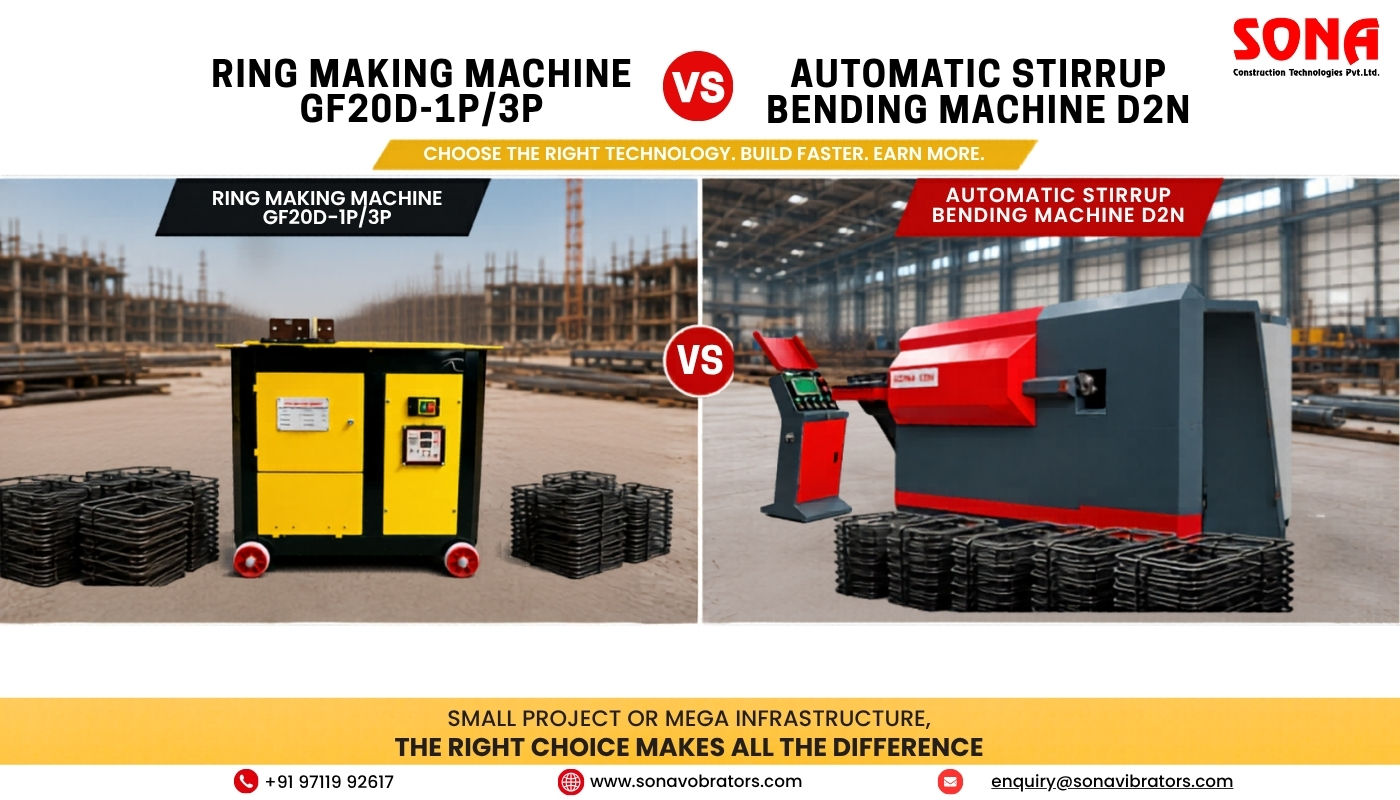
Ring Making Machine vs Automatic Stirrup Bending Machine: The Complete Guide to Maximising Rebar Production, Reducing Labour Costs & Increasing Profitability

Maintenance Tips for Construction Machinery:The Complete 2026 Guide to Maximising Equipment Lifespan, Safety & Uptime
.png)
Cover Blocks in RCC – Importance, Correct Sizes & Critical Mistakes to Avoid

Mini Excavators vs Full-Size Excavators: Which One Do You Really Need?

Copyright © 2026 Sona Construction Technologies Private Limited