Construction sites are high-stakes environments where every hour of unplanned downtime translates directly into project delays, cost overruns, and contractual penalties. The machines that power these sites — from compact equipment like the "Tamping Rammer" and "Walk Behind Rollers" to heavier assets like "Mini Excavators" and Mini Cranes — represent enormous capital investments that demand disciplined, systematic care.
Yet, equipment maintenance remains one of the most chronically underprioritised disciplines in the construction industry. Many contractors operate on a purely reactive basis: run the machine until it breaks, then repair it at maximum cost, under maximum time pressure, with maximum disruption to the project schedule. This approach is extraordinarily expensive.
Industry data consistently shows that unplanned equipment downtime costs the construction sector billions of dollars annually. The average cost of a single machinery breakdown — factoring in idle labour, emergency parts, expedited freight, and project delay penalties — easily exceeds ₹1,00,000 to ₹5,00,000 per incident for mid-size equipment.
This guide, developed with 20+ years of hands-on construction equipment experience, delivers a complete, actionable maintenance framework for every major category of construction machinery. Whether you manage a single "Mini Mixer" or operate a full fleet including "Rebar Bending Machines", "Concrete Cutters", and "Ride on Rollers", these strategies will reduce your downtime, control your costs, and maximise your return on every machine.
💡 Pro Insight: A well-maintained construction machine can outlast a neglected one by 3–5 years, delivering lakhs of rupees in additional production value. Every rupee invested in preventive maintenance saves ₹3–₹5 in reactive repair costs.
1. The Foundation of Any Maintenance Programme: Know Your Equipment
1.1 Master the OEM Manual Before Anything Else
Every piece of construction equipment — from a compact "Plate Compactor" to a heavy-duty "Bar Decoiling Machine" — ships with an Original Equipment Manufacturer (OEM) manual. This document is the single most authoritative reference for your machine's service intervals, fluid specifications, torque settings, and safety protocols. No maintenance programme is complete without it.
- • Maintenance schedules: Daily, 50-hour, 250-hour, 500-hour, and 1,000-hour service intervals are all defined in the manual.
- • Fluid specifications: Using the wrong hydraulic fluid or engine oil grade can void warranties and cause premature component failure.
- • Torque specifications: Incorrect fastener torque is a leading cause of structural failures in fabrication machinery such as the "Iron Worker" and "Automatic Stirrup Bending Machine".
- • Safety lockout procedures: Proper de-energisation protocols protect maintenance personnel from crush, electrical, and hydraulic injection injuries.
1.2 Build a Centralised Equipment Registry
For any fleet larger than three machines, a centralised equipment registry is essential. This registry must document:
- • Machine make, model, serial number, and year of manufacture
- • Date of purchase, original cost, and current depreciated value
- • Hour meter or odometer readings updated weekly
- • Full maintenance history — every service performed, with date and technician signature
- • Warranty status and remaining coverage periods
- • Upcoming scheduled maintenance dates with responsible technician assignment
Modern fleet management applications can automate this tracking, pushing alerts when scheduled service is due and generating compliance reports for client audits or regulatory inspections.
2. The Daily Pre-Shift Inspection: Your Most Powerful Maintenance Tool
The single highest-impact maintenance habit any construction team can adopt costs nothing beyond 15–20 minutes of structured attention before the first ignition of the day. The pre-shift inspection catches developing problems before they become costly failures, creates a documented safety record, and makes operators active participants in equipment care rather than passive users.
2.1 Engine and Fluid Checks
- • Engine oil: Check level with the dipstick. Top up only with the OEM-specified grade — never mix viscosities.
- • Coolant: Check the overflow reservoir level. Never open a hot radiator cap — wait at least 30 minutes after shutdown.
- • Hydraulic fluid: Inspect the sight glass or reservoir level. Hydraulic-powered machines — including the "Rebar Spiral Bending Machine" and "Rebar Threading Machine" — are particularly sensitive to low fluid levels.
- • Fuel: Check level and drain the water separator bowl on diesel-powered equipment. Water in diesel fuel destroys injectors.
- • Visible leaks: Walk the perimeter of the machine and look underneath for oil, coolant, hydraulic fluid, or fuel puddles.
2.2 Mechanical and Structural Inspection
- • "Walk Behind Rollers" and "Ride on Rollers": Inspect drum scrapers for wear, check water spray nozzles for blockage, verify vibration function before each shift.
- • "Tamping Rammer": Check the foot/plate for cracks or loose bolts, inspect the spring assembly for fatigue, verify the throttle returns to idle smoothly.
- • "Plate Compactor": Inspect the exciter housing for cracks, check belt tension and condition, verify handle vibration dampeners are intact.
- • "Mini Excavators": Check track tension and condition, inspect bucket teeth and pins, verify all hydraulic functions before full-load operation.
- • Suspended Platform: Inspect wire ropes for broken strands, verify hoist brake function, check platform structure for cracks or deformation, test overload protection before every lift.
2.3 Electrical and Safety Systems
- • Test all lights: working lights, beacon, and travel warning lights
- • Test horn, backup alarm, and any proximity sensing devices
- • Verify fire extinguisher is present, charged, and accessible from the operator position
- • Check ROPS/FOPS structural integrity where applicable
- • Inspect seat belts for fraying, cuts, or latch malfunction
📋 Industry Best Practice: Document every pre-shift inspection using a digital checklist. This creates a defensible paper trail for warranty claims, insurance disputes, and regulatory audits — and gives management real-time visibility into fleet condition.
3. Engine Maintenance: Protecting the Most Expensive Component on the Machine
The engine is the most costly single component on any powered construction machine. Engine replacement or major overhaul on equipment such as a "Mini Excavator" or "Ride on Rollers" can cost anywhere from ₹1,50,000 to ₹8,00,000 depending on machine size and engine make. Disciplined engine maintenance is the single highest-return investment a fleet manager can make.
3.1 Engine Oil — The Lifeblood of Your Engine
- • Change intervals: Most petrol and diesel construction engines require oil changes every 100–250 operating hours. Severe-duty applications or extreme temperatures may require shorter intervals.
- • Oil grade selection: Always use the viscosity grade specified in the OEM manual. Synthetic oil is recommended for high-ambient-temperature environments such as Indian summers.
- • Oil analysis: Sending oil samples to a laboratory every 250 hours can detect early signs of internal wear, coolant contamination, or fuel dilution — often 200–500 hours before a failure occurs.
- • Filter replacement: Always replace the oil filter at every oil change. A clogged filter bypasses unfiltered oil directly through the engine.
3.2 Air Filtration — Protection Against the #1 Engine Killer
On a dusty construction site, the air filter is simultaneously the most critical and the most neglected maintenance item. A damaged or clogged air filter allows abrasive silica dust particles to enter the engine, causing accelerated wear of cylinder walls, pistons, and rings — damage that cannot be reversed short of a complete engine rebuild.
- • Inspection frequency: Check the air filter restriction indicator daily. On demolition, grinding, or quarrying sites, the filter may require servicing every 8–50 hours.
- • Cleaning direction: Always blow compressed air from inside out — never outside in — to avoid driving particles deeper into the filter media.
- • Housing integrity: Inspect the air filter housing for cracks, loose clamps, or damaged gaskets that allow unfiltered air to bypass the filter entirely.
- • Spare filters on-site: Keep at least two spare air filters for every engine in the fleet. A ₹1,500 filter change prevents a ₹3,00,000 engine rebuild.
3.3 Cooling System — Preventing the Silent Killer
- • Clean the radiator core daily on dusty or muddy sites — use low-pressure water or compressed air from the inside out
- • Check coolant concentration with a refractometer — maintain the correct antifreeze ratio for your region's temperature range
- • Flush and replace coolant every 1,000–2,000 operating hours or as specified in the OEM manual
- • Inspect the radiator cap seal and pressure rating — a faulty cap causes boiling at lower temperatures
- • Check fan belt tension and condition — a slipping belt reduces cooling efficiency by up to 30%
3.4 Fuel System
- • Drain water separator bowls daily on diesel engines — water contamination causes injector corrosion and microbial growth
- • Use only clean, filtered diesel from reputable suppliers — contaminated fuel is a leading cause of common-rail injector failure
- • Replace fuel filters at OEM-specified intervals without extension
- • Keep tanks full overnight to minimise condensation accumulation inside the tank
4. Hydraulic System Maintenance: Keeping Power Flowing Cleanly
Hydraulic systems power the working functions of the most productive machines on any construction site — from the bucket curl of a "Mini Excavator" to the drum drive of a "Walk Behind Rollers" unit. Hydraulic failures are among the most common and most costly equipment breakdowns, yet the vast majority are caused by two entirely preventable factors: fluid contamination and deferred maintenance.
4.1 Hydraulic Fluid Management
- • Fluid selection: Use only the exact hydraulic fluid grade specified in the OEM manual. Never mix fluid types or brands — incompatible base stocks and additive packages react to form varnish, sludge, and accelerated seal wear.
- • Fluid sampling: Analyse hydraulic fluid every 500 hours. Elevated metal particle counts indicate internal component wear; water contamination indicates cooler leaks or failed seals.
- • Change intervals: Replace hydraulic fluid every 1,000–2,000 hours under normal conditions, or every 500 hours on heavily contaminated or coastal sites.
- • Contamination control: Use clean, dedicated transfer equipment when adding fluid. A single instance of dirty fluid introduction can contaminate an entire hydraulic system.
4.2 Hydraulic Hose and Fitting Inspection
Hydraulic hoses on construction equipment operate under pressures of 200–350 bar. A hose failure causes rapid fluid loss, equipment shutdown, and — in the worst case — high-pressure injection injuries that are medical emergencies.
- • Inspect all hoses for abrasion, cracking, swelling, or crimping — replace any hose showing these signs immediately, never tape over a damaged hose
- • Check all fittings for seeping or weeping — address leaks at their source, not the symptom
- • Protect hoses from heat, sharp edges, and moving parts using spiral wrap sleeves or heat-resistant sleeving
- • Replace hydraulic hoses on a time-based schedule (every 4–6 years) regardless of visual appearance — rubber degrades internally even when the exterior looks acceptable
- • Always use replacement hoses rated at or above the original working pressure specification
4.3 Hydraulic Cylinders
- • Keep cylinder rods clean and very lightly coated — dirt on the rod is forced past wiper seals on every retraction stroke
- • Retract cylinders partially before parking overnight to protect rods from dew, rain, and UV degradation
- • Address any hydraulic cylinder seal leaks immediately — a minor seep becomes a major leak within days under operating pressure
- • Inspect cylinder pins and bushings every 500 hours — worn pivots impose bending loads on cylinder tubes, accelerating seal failure
5. Maintenance for Compaction Equipment
Proper soil and asphalt compaction is fundamental to pavement longevity and structural stability. SONA's range of compaction equipment — including the "Walk Behind Rollers", "Ride on Rollers", "Plate Compactor", and "Tamping Rammer" — all require consistent maintenance to deliver optimal compaction force and prevent costly downtime mid-project.
5.1 Walk Behind Rollers & Ride on Rollers
- • Daily: Check engine oil, fuel, and coolant levels; inspect drum scrapers for wear; test vibration engagement; clear mud and debris from drum surfaces and drive components.
- • Every 50 hours: Check and top up gearbox oil; inspect drum bearings for play; check water spray system nozzles and filter for blockage.
- • Every 250 hours: Change engine oil and filter; inspect drive belts for cracking and tension; check all fasteners for vibration-induced loosening.
- • Every 500 hours: Service the exciter system; replace drive belts; inspect drum shell thickness for wear; service the vibration bearing assembly.
- • Storage: Flush the water spray system completely before storage or cold-weather shutdowns to prevent freeze damage and mineral deposit blockage.
5.2 Plate Compactor
- • Daily: Inspect the baseplate for cracks or wear; check engine oil; clear soil and aggregate from the exciter housing.
- • Every 25 hours: Check and adjust V-belt tension; inspect vibration dampening handles for deterioration.
- • Every 100 hours: Change engine oil; inspect exciter housing bolts; check the centrifugal clutch for wear.
- • Long-term storage: Coat the baseplate with a thin layer of oil to prevent surface rust, which accelerates wear on the next use.
5.3 Tamping Rammer
- • Daily: Inspect the compaction foot/shoe for cracks; check the spring system for fatigue or breakage; verify the fuel and oil levels.
- • Every 50 hours: Change engine oil; inspect the piston and cylinder for wear; check all bolts and fasteners.
- • Every 100 hours: Inspect and replace the compaction shoe if worn beyond specification; clean the carburettor.
- • Critical check: Never operate a "Tamping Rammer" with a cracked or deformed foot — the energy imbalance accelerates internal component damage and creates a projectile hazard.
6. Maintenance for Rebar and Steel Fabrication Equipment
Steel reinforcement equipment forms the backbone of reinforced concrete construction. Properly maintained rebar machinery delivers precise bends, consistent thread quality, and safe operation — poorly maintained equipment produces defective reinforcement that can compromise structural integrity.
6.1 Rebar Bending Machine
The "Rebar Bending Machine" is one of the hardest-working machines on any reinforced concrete project. Its bending disc, rollers, and drive system operate under continuous high-torque loads that demand consistent lubrication and periodic wear assessment.
- • Daily: Clean the bending disc and pins of all scale, rust, and concrete splatter; inspect pins for wear and cracks; check bending disc for deformation; verify all safety guards are in place.
- • Every 50 hours: Lubricate all pivot points, bending pins, and the turntable bearing with the OEM-specified grease; check reduction gearbox oil level.
- • Every 250 hours: Change gearbox oil; inspect the drive motor brushes (if DC motor); check bending disc mounting bolts for loosening due to vibration.
- • Pin replacement: Replace bending pins when visible wear exceeds 1–2mm — worn pins produce inaccurate bend angles and increase motor strain.
- • Electrical: Inspect power cable insulation for abrasion; check limit switch function; verify emergency stop operates correctly before every shift.
6.2 Rebar Spiral Bending Machine
The "Rebar Spiral Bending Machine" produces spiral stirrups for columns and piles at high production rates. The precision of the spiral diameter is directly dependent on the condition of the forming rollers and mandrel assembly.
- • Daily: Clean forming rollers and mandrel of all scale and debris; verify spiral diameter against specification using a template gauge.
- • Every 50 hours: Lubricate all roller bearings and adjustment screws; check drive chain tension and lubrication.
- • Every 250 hours: Inspect forming rollers for wear grooves; replace rollers when the groove depth exceeds 2mm to maintain spiral accuracy.
- • Calibration: Verify spiral pitch and diameter against project specifications monthly — forming roller wear causes pitch drift that accumulates gradually.
6.3 Rebar Threading Machine
The "Rebar Threading Machine" cuts precisely formed threads on rebar ends for mechanical coupler connections. Thread quality is safety-critical — a substandard thread can cause coupler failure under load.
- • Daily: Inspect threading dies for chipping, rounding, or buildup of metal debris; clean the cutting head after each use.
- • Every 50 hours: Lubricate the threading head, lead screw, and collet mechanism; check coolant/cutting fluid level and concentration.
- • Die replacement: Replace threading dies when thread gauging shows out-of-tolerance threads — do not attempt to regrind dies in the field, as thread geometry is precision-machined.
- • Thread inspection: Check the first threaded bar of every production run with a thread gauge. Never ship bars with threads cut using worn dies.
6.4 Bar Decoiling Machine
The "Bar Decoiling Machine" straightens and feeds coil rebar to downstream cutting and bending operations. Consistent decoiling tension is critical to maintaining straight, accurate cut lengths.
- • Daily: Inspect straightening rollers for wear and alignment; clear all scale and debris from the roller path; check for smooth, jam-free rebar feed.
- • Every 100 hours: Lubricate all roller bearings; check drive motor coupling for wear; inspect the rebar guide channel for wear grooves.
- • Roller alignment: Misaligned straightening rollers produce residual camber in the bar — check and adjust alignment whenever output bars show visible curvature.
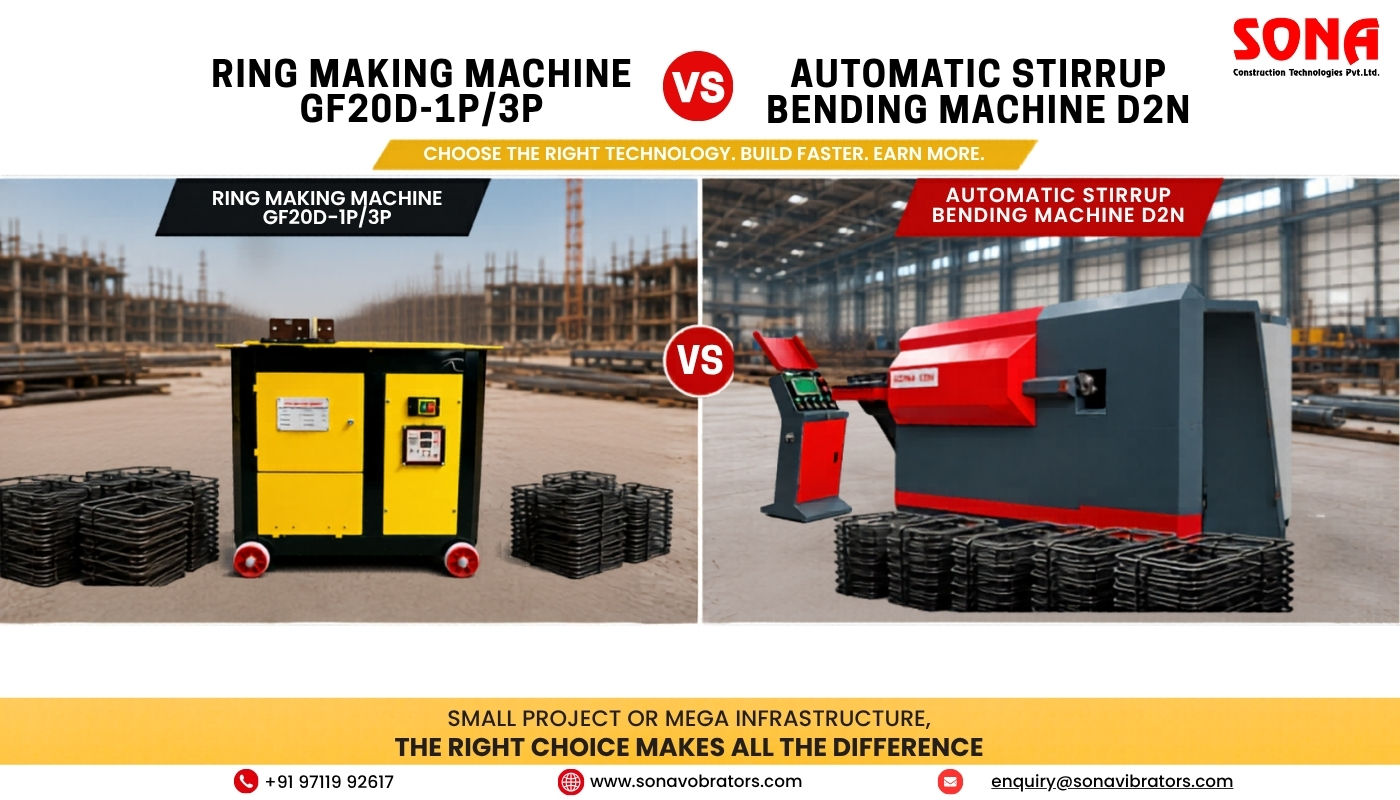
6.5 Automatic Stirrup Bending Machine
The "Automatic Stirrup Bending Machine" is a high-speed CNC machine that feeds, cuts, and bends stirrups to programmed dimensions automatically. It represents a significant capital investment that justifies a dedicated, structured maintenance programme.
- • Daily: Clean the feeding rollers and straightening unit; verify bend angle accuracy against programmed parameters using a manual check piece; inspect the cutting blade.
- • Every 50 hours: Lubricate all linear guides, ball screws, and servo motor couplings per the OEM lubrication chart.
- • Every 250 hours: Inspect and clean servo motor cooling vents; check all pneumatic fittings for leaks; back up machine programs to an external device.
- • Cutting blade: Replace or re-grind the cutting blade when cut-end quality deteriorates — ragged cuts indicate a dull blade that increases cutting force and stresses the drive system.
- • Software/firmware: Keep the CNC controller firmware updated to the manufacturer's latest stable release to benefit from bug fixes and performance improvements.
6.6 TMT Ring Making Machine
The "TMT Ring Making Machine" forms circular stirrups from TMT bars for round columns and water tanks. The forming rollers must be maintained in precise condition to produce rings of consistent diameter.
- • Daily: Inspect forming rollers for wear; clean scale from roller grooves; verify ring diameter against template.
- • Every 100 hours: Lubricate all bearings and drive gears; check and adjust inter-roller clearance for the TMT bar gauge being processed.
- • Calibration check: Measure completed ring diameter with vernier calipers weekly — roller wear causes progressive diameter increase that can accumulate beyond tolerance.
6.7 Scrap Straightening Machine
The "Scrap Straightening Machine" recovers value from scrap rebar by straightening it for reuse. Because scrap bar varies widely in condition and strength, the machine is subject to unpredictable impact loads.
- • Daily: Inspect straightening rollers and guides for wear, cracking, or deformation; clear all scale and foreign material before starting.
- • Every 50 hours: Check roller bearing condition; lubricate all pivot points; inspect the drive chain for elongation and lubrication.
- • Critical safety: Never process bars with welded sections, bolts, or attachments through the straightening rollers — foreign objects cause catastrophic roller and bearing failure.
7. Maintenance for Concrete Equipment
Concrete has an unforgiving maintenance characteristic: it hardens. Equipment that is not cleaned promptly and thoroughly after each use will accumulate hardened concrete that eventually renders the machine inoperable. Preventive cleaning is therefore the dominant maintenance discipline for concrete equipment.
7.1 Mini Mixer
The "Mini Mixer" is one of the most widely used machines on small and medium construction projects. Its relatively simple design belies the importance of consistent daily maintenance.
- • After every use: Add clean water and aggregate to the drum immediately after discharge and run for 2–3 minutes to scour the interior. Never allow concrete to harden inside the drum.
- • Weekly: Inspect drum blades for wear and secure attachment; check drum drive ring and roller condition; lubricate drum axle bearings.
- • Every 100 hours: Change engine/motor oil; inspect the V-belt drive system; check electrical connections for corrosion (particularly in coastal environments).
- • Hardened concrete: If concrete hardens in the drum, use dilute muriatic acid solution (with appropriate PPE and neutralisation) to dissolve it — mechanical chipping risks damaging the drum shell and blades.
7.2 Concrete Cutter
The "Concrete Cutter" is subjected to extreme abrasive wear during operation. Diamond blade condition and water-cooling system function are the two most critical maintenance priorities.
- • Daily: Inspect the diamond blade for cracks, segment loss, or glazing; check the blade guard for damage; verify water supply connections and flow rate.
- • Blade inspection: Remove and closely inspect the blade after every 8 hours of cutting. A glazed blade must be dressed by cutting through abrasive material such as sandstone or green concrete — continued use of a glazed blade causes blade overheating and bond failure.
- • Every 50 hours: Clean the water cooling channels; inspect the blade flange for flatness; lubricate the blade shaft bearings; check the V-belt tension and condition.
- • Engine/motor: Follow the same oil change and air filter service schedule as for other petrol or electric equipment of similar power rating.
7.3 Concrete Grinding Machine
The "Concrete Grinding Machine" prepares concrete surfaces for coatings, overlays, and repairs. Consistent grinding results depend entirely on disc/segment condition and machine settings.
- • Daily: Inspect grinding discs and segments for wear and cracking; clean dust extraction ports and hoses; check disc mounting for security.
- • Every 50 hours: Lubricate motor spindle bearings; inspect the drive belt; check dust bag or collector filter and replace when flow resistance increases.
- • Grinding medium selection: Always use the correct bond hardness for the concrete being ground — a soft bond segment on hard concrete wears rapidly; a hard bond segment on soft concrete glazes and produces poor results.
7.4 Screed Vibrator
The "Screed Vibrator" consolidates fresh concrete slabs to eliminate voids and surface defects. The vibrating head assembly is the primary wear item.
- • Daily: Clean the vibrating head thoroughly after every pour — concrete will set between the head and shaft if not cleared immediately.
- • Every 50 hours: Inspect the flexible shaft for kinking, abrasion, or twisting damage — a kinked shaft generates heat that destroys the shaft casing within hours of operation.
- • Head inspection: Replace the vibrating head when eccentric weight wear causes amplitude reduction below the OEM minimum specification — reduced amplitude results in inadequate consolidation and structural voids in the slab.
- • Storage: Always store the flexible shaft and head in a straight or gently curved position — never coiled tightly, as this causes permanent shaft deformation.
7.5 Power Trowel
The "Power Trowel" — also known as a helicopter — finishes concrete slabs to a smooth, dense surface. Blade pitch, condition, and rotational speed are the three variables that determine finish quality.
- • After every pour: Wash all concrete from blades, blade holders, and the spider assembly before it sets. Hardened concrete on blades causes vibration, poor finish, and bearing stress.
- • Every 50 hours: Change engine oil; inspect gearbox oil level; lubricate the blade pitch control shaft; check the blade holder bolts.
- • Blade replacement: Replace float blades when thickness is reduced by 30% from new. Replace finish blades when any chips, cracks, or bends are visible — surface defects in the blade are directly transferred to the concrete surface.
- • Blade pitch: Verify that all blade holders are set to exactly the same pitch angle — uneven pitch causes vibration, reduces power transmission efficiency, and shortens blade life.
7.6 Bull Float
The Bull Float is a simple but essential concrete finishing tool. While mechanically straightforward, proper care extends its effective service life significantly.
- • After every use: Wash all concrete from the float pan before it cures. Hardened concrete buildup prevents the flat, smooth contact required for quality finishing.
- • Weekly: Inspect the float pan for warping or surface pitting — a warped pan leaves ridges in the concrete surface.
- • Handle inspection: Check all pole connections for security; inspect pole sections for cracking, particularly at jointing points where bending stress is highest.
8. Maintenance for Surface Preparation Equipment
8.1 Scarifier PI250
The "Scarifier PI250" removes surface coatings, mill scale, and weak concrete layers using rotating flails. The flail drum assembly operates at high RPM and is the primary wear component.
- • Daily: Inspect all flails for wear and cracking; remove and replace worn or broken flails before starting — unbalanced drum assemblies cause excessive vibration and bearing damage.
- • Flail inspection standard: Replace individual flails when wear reduces thickness by more than 40% of the new specification. Replace the full set simultaneously to maintain drum balance.
- • Every 50 hours: Inspect drum bearings for play and noise; check the drive belt tension; clean the dust extraction ports.
- • Dust extraction: Never operate without the dust extraction system connected and functioning — concrete dust contains respirable crystalline silica, which causes silicosis.
9. Maintenance for Material Handling and Access Equipment
9.1 Mini Excavators
Despite their compact size, "Mini Excavators" operate under the same demanding conditions as their full-size counterparts and require an equivalently rigorous maintenance programme.
- • Every 10 hours: Grease all pins, bushings, and the slewing ring; check hydraulic fluid level; inspect tracks and bucket teeth.
- • Every 100 hours: Change engine oil and filter; inspect the air filter; check all hydraulic hoses and fittings.
- • Every 500 hours: Replace hydraulic filter; change final drive oil; inspect the slewing ring for play and gear wear.
- • Undercarriage: Track tension on compact excavators is particularly sensitive — correct tension is critical to preventing track derailment in tight excavation areas.
9.2 Mini Cranes
The "Mini Cranes" are safety-critical lifting devices. All maintenance on lifting equipment must comply with applicable statutory inspection requirements and be documented by a competent person.
- • Before every lift: Inspect the hook, hook latch, and load block; verify wire rope is undamaged and correctly spooled; test all limit switches and the load indicator.
- • Daily: Lubricate the hook swivel; check all outrigger pads and locking pins; verify slewing brake function.
- • Monthly: Lubricate the wire rope along its full working length; inspect all sheaves for wear; check hoist brake adjustment.
- • Annual statutory inspection: All lifting equipment must be inspected by a competent person and issued a test certificate per applicable IS/NBC/OSHA requirements.
9.3 Dumper
The "Dumper" transports materials across site with high-cycle frequency. Braking system and tipping mechanism condition are the two most safety-critical maintenance priorities.
- • Daily: Check engine oil, fuel, and coolant; inspect tyres/tracks for damage and pressure; test braking function before the first loaded run.
- • Every 50 hours: Lubricate the tipping pivot and skip hinge points; inspect the tipping hydraulic ram and hose; check skip locking mechanism.
- • Every 250 hours: Change engine oil; inspect final drive; check all fasteners on the skip body structure.
- • Braking: Never operate a "Dumper" with compromised braking function — a loaded dumper on an incline is a life-safety hazard.
9.4 Suspended Platform
The Suspended Platform is the highest-risk piece of equipment on any façade or high-rise project. Maintenance must be performed by competent, trained personnel and documented in full.
- • Before every use: Inspect wire ropes for broken wires, kinking, or corrosion (replace if more than 10% of wires are broken in one lay length); verify hoist brake function under a test load; inspect the safety lock.
- • Weekly: Lubricate wire ropes; inspect all electrical connections; check platform structure for cracks, deformation, or loose fasteners.
- • Monthly: Full inspection of hoists, safety locks, suspension wire ropes, and platform structure by a competent inspector; document findings and corrective actions.
- • Load test: Subject platforms to a 1.5× rated load test after any structural repair and at intervals required by applicable statutory regulations.
10. Maintenance for Metal Fabrication Equipment
10.1 Iron Worker
The "Iron Worker" performs punching, shearing, notching, and bending of structural steel sections. Because it operates through a mechanical flywheel-and-clutch or hydraulic system under very high force, proper maintenance is critical to both machine longevity and operator safety.
- • Daily: Inspect all tooling (punches, dies, blades) for cracking, chipping, or mushrooming; verify all safety guards are correctly installed and functioning.
- • Punch and die clearance: Check and adjust punch-to-die clearance per the OEM chart for the material thickness being processed — incorrect clearance causes excessive burring, die cracking, and increased power demand.
- • Every 50 hours: Lubricate all guide bushings, tool holders, and pivot points; check hydraulic fluid level (on hydraulic models); inspect electrical controls.
- • Blade replacement: Replace shear blades when cutting produces excessive burr or requires noticeably higher effort — dulled blades transfer shock loads throughout the machine structure.
- • Safety: Never reach into the tooling zone without the machine in the safe, de-energised position. "Iron Workers" generate forces of 45–120 tonnes — fingers and hands will not survive contact with the tooling.
11. Construction Equipment Maintenance Comparison Table
The table below provides a consolidated reference for maintenance priorities, critical wear components, and estimated annual costs across the key equipment categories.
| Equipment |
Key Daily Check |
Critical Interval |
Primary Wear Parts |
Est. Annual Cost (INR) |
Risk Level |
| "Mini Excavator" |
Grease, tracks, fluids |
100-hr oil change |
Bucket teeth, track chain, slewing ring |
₹60,000–₹1,50,000 |
HIGH |
| "Walk Behind / Ride on Rollers" |
Drum scrapers, water system |
250-hr service |
Drum bearing, scrapers, drive belt |
₹25,000–₹60,000 |
MEDIUM |
| "Plate Compactor" |
Baseplate, belt tension |
100-hr oil change |
V-belt, exciter bearing, clutch |
₹10,000–₹25,000 |
LOW |
| "Tamping Rammer" |
Foot/shoe, spring, fuel |
50-hr oil change |
Compaction shoe, piston rings, spring |
₹8,000–₹20,000 |
LOW |
| "Rebar Bending Machine" |
Bending pins, disc, guards |
250-hr gearbox oil |
Bending pins, gearbox, motor brushes |
₹15,000–₹40,000 |
MEDIUM |
| "Auto Stirrup Bending Machine" |
Blade, rollers, program check |
50-hr servo lube |
Cutting blade, forming rollers, guides |
₹30,000–₹80,000 |
HIGH |
| "Rebar Threading Machine" |
Dies, coolant, collet |
50-hr lubrication |
Threading dies, collet, cutting fluid |
₹20,000–₹50,000 |
MEDIUM |
| "Concrete Cutter" |
Diamond blade, water flow |
50-hr bearing lube |
Diamond blade, blade flange, belts |
₹20,000–₹55,000 |
MEDIUM |
| "Mini Mixer" |
Drum cleaning, blades |
100-hr oil change |
Drum blades, drive ring, roller |
₹8,000–₹20,000 |
LOW |
| "Power Trowel" |
Blade condition, pitch |
50-hr engine oil |
Float/finish blades, gearbox, spider |
₹15,000–₹35,000 |
MEDIUM |
| Suspended Platform |
Wire rope, hoist, brakes |
Monthly full inspection |
Wire rope, safety lock, hoist brake |
₹40,000–₹1,20,000 |
CRITICAL |
| "Mini Cranes" |
Hook, rope, limits |
Monthly lubrication |
Wire rope, hook block, hoist brake |
₹30,000–₹80,000 |
CRITICAL |
| "Scarifier PI250" |
Flails, dust extraction |
50-hr bearing check |
Flails, drum bearings, drive belt |
₹15,000–₹40,000 |
MEDIUM |
| "Iron Worker" |
Tooling, guards, clearance |
50-hr lubrication |
Punches, dies, shear blades |
₹20,000–₹55,000 |
HIGH |
| "Dumper" |
Brakes, tyres, tipping ram |
250-hr full service |
Brake pads, tipping cylinder, skip |
₹20,000–₹50,000 |
HIGH |
*Estimated annual preventive maintenance costs. Actual costs vary with utilisation hours, operating environment, and operator skill. Safety-critical equipment (Suspended Platform, Mini Cranes) costs exclude mandatory statutory inspection fees.
12. Predictive Maintenance: The Next Level of Fleet Performance
While preventive maintenance follows fixed schedules, predictive maintenance uses real-time condition monitoring to intervene only when data indicates a developing problem — reducing both unnecessary maintenance labour and unexpected failures simultaneously.
12.1 Oil Analysis
Sending oil samples to an accredited laboratory every 250 hours for each engine and major hydraulic system costs ₹800–₹2,000 per sample and returns a detailed report showing metal particle concentrations, viscosity measurements, contamination levels, and additive package depletion.
12.2 Vibration and Thermal Monitoring
- • Vibration analysis: Particularly valuable for rotating equipment such as the "Iron Worker", "Rebar Bending Machine", and "Bar Decoiling Machine" — changes in vibration frequency signatures indicate developing bearing fatigue or shaft imbalance, typically 200–500 hours before failure.
- • Infrared thermography: Thermal cameras identify abnormal heat in electrical panels, motor windings, and hydraulic systems without requiring equipment shutdown. Invaluable for the "Automatic Stirrup Bending Machine's" servo drive systems and the Suspended Platform's hoist electrical components.
12.3 Telematics and Remote Monitoring
Where machines are equipped with telematics modules, remote monitoring delivers real-time engine fault codes, operating hour tracking, idle time monitoring, and geofencing and location alerts — preventing unauthorised use that accelerates wear.
13. Common Maintenance Mistakes to Avoid — and How to Correct Them
⚠ Warning: The following errors account for the majority of preventable equipment failures observed across construction sites. Recognising and eliminating them from your operation will have an immediate and measurable impact on fleet reliability.
-
Mistake 1: Reactive-Only Maintenance Culture
Running machines until they break, then scrambling to repair them at maximum cost. Fix: Implement OEM-based preventive maintenance schedules for every machine in the fleet. Track compliance weekly and measure total maintenance cost per operating hour monthly.
-
Mistake 2: Using Incorrect or Substitute Fluids
Substituting hydraulic fluid grades or engine oil viscosities because the correct specification is temporarily unavailable. Fix: Maintain a minimum inventory of all OEM-specified fluids for every machine. If the correct fluid is not available, the machine stops — no exceptions.
-
Mistake 3: Skipping Intervals During Busy Periods
Deferring oil changes or filter replacements because 'the machine is running fine.' Fix: Deferred maintenance creates compounded risk. Schedule maintenance proactively around project milestones — never let it become reactive.
-
Mistake 4: Undertrained Operators
Assigning operators to machines without proper training in pre-shift inspection procedures. Fix: Implement a structured operator induction programme covering machine-specific pre-shift inspection, basic fluid checks, and the 'stop and report' protocol. Fleets that invest in operator training typically see 15–25% reductions in maintenance costs within 12 months.
-
Mistake 5: Neglecting Cleaning as Maintenance
Allowing mud, concrete, and debris to accumulate on machine frames, drive components, and cooling systems. Fix: Require operators to clean their machines at the end of every shift as a condition of completing their daily log. Cleaning is not optional — it is maintenance.
-
Mistake 6: Ignoring Safety Device Maintenance
Bypassing or failing to maintain safety devices such as limit switches on the "Automatic Stirrup Bending Machine", overload indicators on the "Mini Cranes", or safety locks on the Suspended Platform. Fix: Safety devices must be inspected and tested as part of every pre-shift inspection. A bypassed safety device is a hidden liability that can result in severe injury, fatality, and criminal prosecution.
14. Building a World-Class Maintenance Programme: 5 Steps
-
Step 1 — Fleet Condition Baseline Assessment
Before building a maintenance programme, inspect every machine in your fleet using a standardised assessment form covering engine, hydraulics, electrical, structural, and safety systems. This baseline reveals which machines need immediate remedial work and establishes a reference point for measuring future improvement.
-
Step 2 — OEM-Based Maintenance Schedules
Develop written service schedules for each machine type — "Rebar Bending Machine",

.png)

.png)