
.png)
A foundation is the lowest structural element of any building. Its job is straightforward but critical: transfer the combined weight of every wall, column, beam, slab, and occupant safely into the ground below. Get the foundation wrong, and the consequences compound over time — uneven settlement, cracks running through walls, doors and windows that no longer close, and in serious cases, structural failure. Get it right, and a building can stand safely for 50, 100, even 200 years with minimal intervention. Foundation selection is not guesswork. It depends on three variables that engineers assess before any design decision is made: Soil Bearing Capacity (SBC): The maximum load per unit area that soil can support without shearing or excessive settlement. Dense sand or rock may handle 300–500 kN/m², while soft clay may manage only 50–100 kN/m². A higher structural load on weaker soil always pushes toward a larger or deeper foundation. Structural Load: A single-floor house exerts far less load on the ground than a 20-storey apartment tower. The heavier the structure, the more engineered the foundation solution needs to be. Groundwater Level: When the water table is close to the surface, soil loses bearing strength, excavation becomes dangerous, and waterproofing becomes essential. High water tables typically rule out shallow isolated footings. With those fundamentals in place, let's look at each major foundation type in detail.
An isolated footing — also called a spread footing or pad footing — supports a single column independently. Instead of concentrating the column's load on a small contact area, the footing spreads it across a wider concrete base, reducing the pressure on the soil below.
A simple analogy: standing on soft ground with a stiletto heel creates intense, localised pressure and you sink. Wearing flat-soled shoes distributes your weight over a larger area — the pressure drops and you stay on the surface. An isolated footing is the flat shoe.
Pits are dug at each column location. For small projects, this is often done using a Mini Excavator, which is ideal for tight residential spaces. Excavated soil is then loaded into a Dumper and removed from the site.
A 75–100 mm plain cement concrete layer is laid to create a level surface and prevent corrosion of reinforcement.
Steel bars are cut and bent into grids. For efficiency, a Rebar Bending Machine is used. Bars from coils are first processed using a Bar Decoiling Machine.
Shuttering boards are placed to maintain the footing shape during concrete pouring.
Concrete is prepared using a Mini Mixer, especially useful for small or remote sites. After pouring, compaction is done using a Screed Vibrator to remove air voids and ensure strength.
The footing is kept moist for 7–14 days to achieve full strength.
A three-storey residential house was constructed using isolated footings. Excavation was done using a Mini Excavator, reinforcement prepared with a Rebar Bending Machine, and concrete mixed using a Mini Mixer.
The project was completed efficiently with no settlement issues observed even after 18 months, proving the effectiveness of isolated footings under suitable soil conditions.
.png)
A raft foundation is a single, continuous reinforced concrete slab that extends under the entire building footprint and supports all columns and load-bearing walls simultaneously.
Rather than concentrating load at individual column bases, the raft spreads the total building load across the full ground area — like a boat hull distributing weight across water. This reduces soil pressure and allows construction on weak ground.
The entire building area is excavated to a uniform depth. Excavated material is removed using dumpers for efficient site clearance.
The exposed soil is compacted to improve strength. A Plate Compactor is used for general compaction, while a Tamping Rammer is used for tight or edge areas where precision compaction is required.
A membrane is laid to prevent moisture ingress, followed by a PCC layer to create a clean base.
Large quantities of steel are used in raft foundations. Circular stirrups and spiral reinforcements are prepared using a Rebar Spiral Bending Machine, ensuring accuracy and speed in reinforcement work.
Concrete is poured continuously to avoid weak joints. Compaction is done using a Screed Vibrator to remove air voids and ensure proper bonding with reinforcement.
The slab is cured for at least 14 days to prevent cracks and ensure full strength development.
A residential building used a raft foundation due to weak soil conditions. Soil compaction was done using a Plate Compactor and Tamping Rammer. Reinforcement was efficiently prepared using a Rebar Spiral Bending Machine, and concrete compaction was carried out using a Screed Vibrator.
The project achieved minimal settlement and long-term structural stability, demonstrating the effectiveness of raft foundations in challenging soil conditions.
.png)
Pile foundation is a deep foundation system that transfers building loads to deeper, stronger soil layers. Long, slender structural elements called piles are driven or cast into the ground until they reach a stable layer. A reinforced concrete pile cap connects these piles and distributes the load.
Piles transfer load through two main mechanisms:
Soil testing is conducted to determine soil strength, depth, and groundwater conditions.
Engineers design the number, spacing, and size of piles based on structural load.
Piles are installed using drilling rigs or driven into the ground depending on the type.
Steel cages are prepared using machines like TMT Ring Making Machine or Automatic Stirrup Bending Machine to ensure accurate and consistent helical links.
The reinforcement cage is then lifted and placed into the borehole using a mini crane, ensuring precise positioning without disturbing the borehole.
Concrete is poured using tremie method to avoid segregation, especially in water-filled boreholes.
Pile caps are constructed to connect multiple piles and transfer load from columns.
Load tests are performed to verify pile capacity and ensure safety.
A high-rise building on weak soil used pile foundations to ensure stability. Reinforcement cages were efficiently fabricated using a Automatic Stirrup Bending Machine and TMT Ring Making Machine.
The cages were placed using a mini crane, ensuring accuracy and safety. The project achieved minimal settlement and long-term structural stability.
.png)
| Factor | Isolated | Raft | Pile |
|---|---|---|---|
| Soil Condition | Strong, stable | Weak to moderate | Very weak or deep |
| Structural Load | Low to moderate | Moderate to heavy | Heavy to very heavy |
| Building Height | 1–4 floors | 4–15 floors | Any, especially high-rise |
| Water Table | Low | Moderate (with waterproofing) | High |
| Cost | Lowest | Moderate | Highest |
| Construction Speed | Fast | Moderate | Slow |
| Specialist Requirement | Low | Moderate | High |
| Key Equipment | Mini Excavator, Mini Mixer, Rebar Bending Machine | Plate Compactor, Tamping Rammer, Iron Worker | Auto Stirrup Bender, TMT Ring Machine, Mini Crane |
The decision starts with a geotechnical investigation — soil samples are tested to determine bearing capacity, moisture content, and profile. This is combined with structural load calculations. The foundation type that safely carries the load without excessive settlement, at the most reasonable cost, is selected. Water table, site access, and proximity to other structures also play a role.
Differential settlement is the most common consequence — different parts of the building sink at different rates, causing cracks, structural stress, and long-term damage. Fixing foundation issues after construction is extremely costly, making proper design essential.
Yes. In many urban sites, especially where soil is weak or columns are closely spaced, raft foundations are a more reliable solution and help eliminate differential settlement risks.
Tall structures generate massive loads that shallow foundations cannot support. Pile foundations transfer this load to deeper, stronger soil layers, ensuring stability and safety.
Yes. A piled raft foundation combines both systems — the raft distributes load while piles provide additional support and reduce settlement.
High groundwater reduces soil strength and creates uplift pressure. Engineers typically use raft foundations with waterproofing or pile foundations to bypass weak soil zones.
Differential settlement occurs when different parts of a building settle unevenly. Even small variations can cause cracks, structural issues, and functional problems like jammed doors. Raft and pile foundations help minimize this risk.
There is no fixed depth. Shallow foundations are usually placed 1–3 metres deep, while pile foundations can extend 10–40 metres depending on soil conditions. Proper soil testing determines the exact depth.
The equipment required depends on the foundation type:
Foundation design is one of the few areas in construction where the right answer genuinely depends on combining multiple variables — soil condition, structural load, water table, site constraints, and budget. There is no single best foundation for every project. Isolated footings are the natural starting point for small structures on competent soil. They are economical, quick to build, and require minimal specialist input or heavy equipment — a Mini Excavator and a Mini Mixer are often sufficient. But their usefulness ends the moment soil weakens or loads increase significantly. Raft foundations bridge the gap between light residential work and serious commercial construction. By spreading load across the entire building footprint, they work on ground that isolated footings could not handle — but demand more thorough site preparation, including proper compaction with a Plate Compactor or Tamping Rammer, and far more reinforcement steel processed efficiently through a Rebar Bending Machine. Pile foundations exist for the conditions where nothing else works: very weak soil, very heavy loads, waterlogged and reclaimed sites. Their execution demands specialised equipment at every stage — from TMT Ring Making Machines and Automatic Stirrup Bending Machines for cage fabrication to Mini Cranes for precise cage placement. The most important principle across all three: foundation selection must follow a proper soil investigation. Choosing based on habit, budget pressure, or a neighbour's experience — without testing the actual ground — is how buildings fail. Engage a geotechnical engineer, get the data, and let the design follow from it. The right foundation, built with the right equipment, is what ensures your structure stands safely for generations.
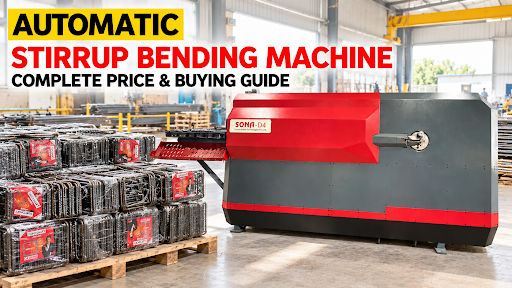
Automatic Stirrup Bending Machine: Complete Price & Buying Guide (India)

Rebar Bending Machine Price in India: Types, Capacity, Power & Complete Buying Guide

Sona at bauma CONEXPO INDIA 2026: A Look Inside Stall H14-B55
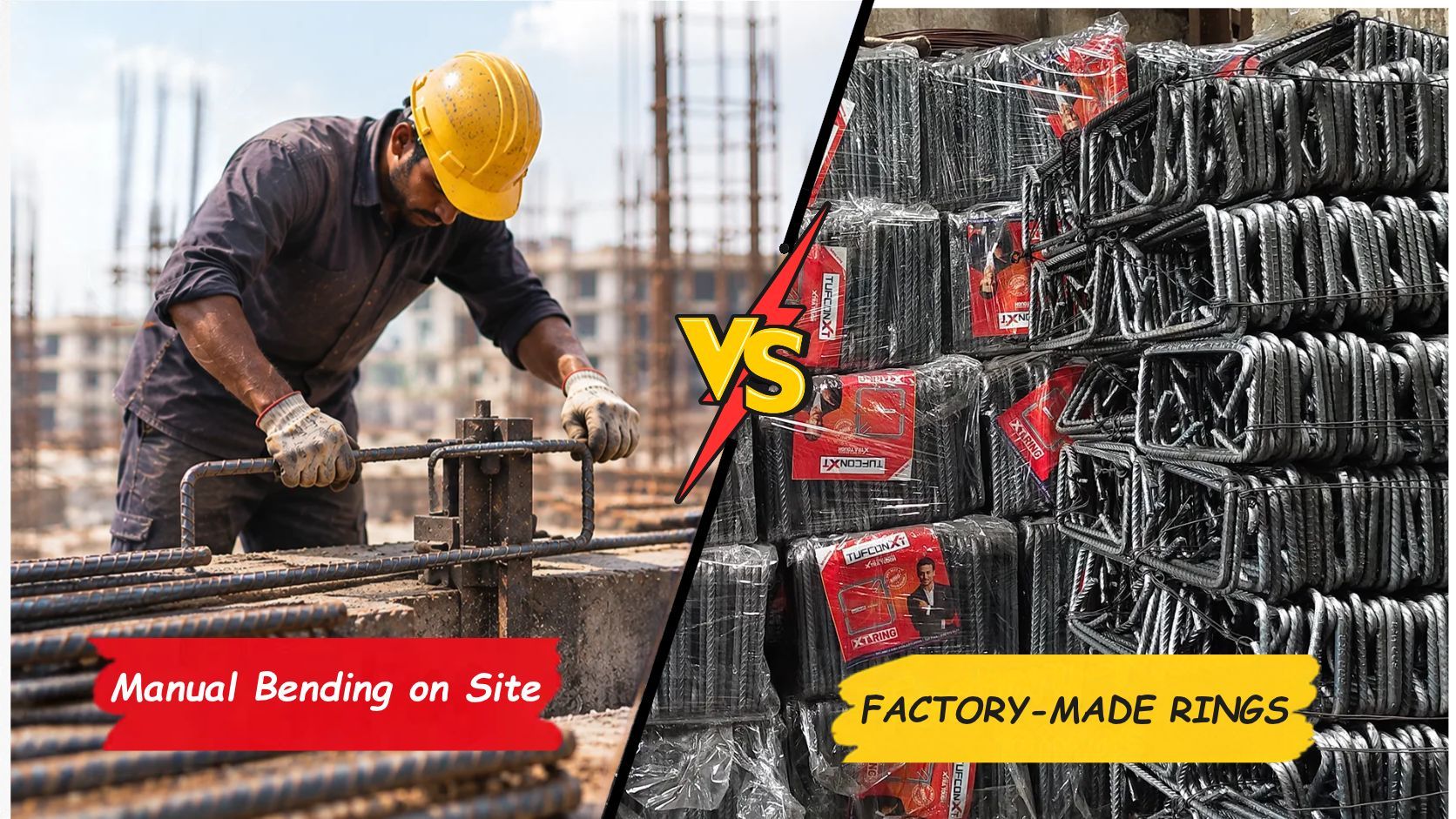
TMT Stirrup Bending: Machine Bending vs. Manual Bending — Which Is Better?
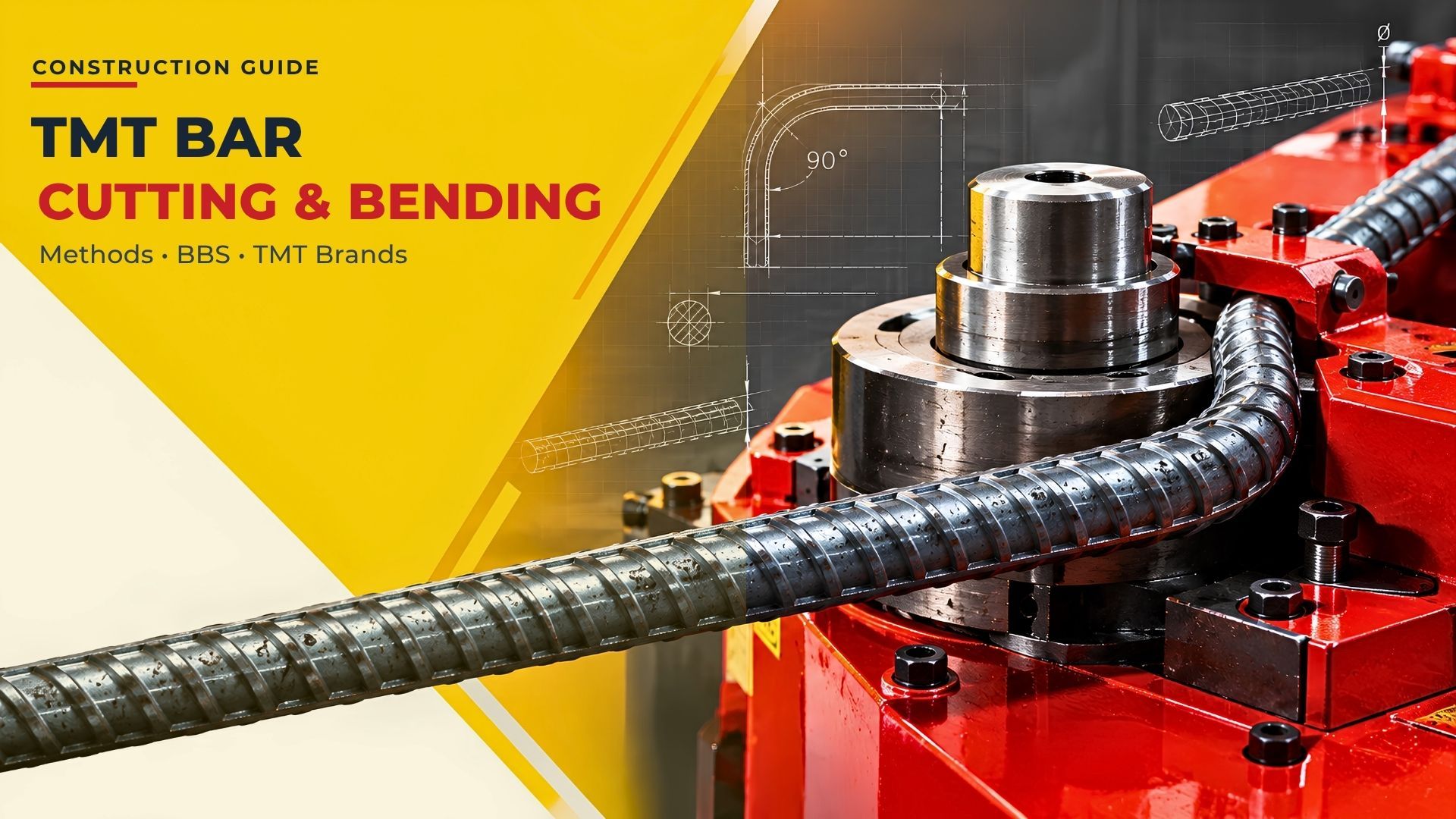
TMT Bar Cutting and Bending: Complete Guide, Methods, BBS & TMT Brands in India

Copyright © 2026 Sona Construction Technologies Private Limited